


Ever feel like you just blend into the background? Like no matter what you do, you're overlooked in meetings, at social gatherings, or even just walking down the street. It's a frustrating feeling, knowing you have more to offer but your presence just doesn't command attention. What if you could change that narrative without saying a single word?
The secret isn't about being the loudest person in the room. It's about mastering the unspoken language of confidence, starting with the very way you walk.
This guide is your blueprint. We'll break down the practical mechanics and powerful mindset shifts you need to transform your walk from hesitant to authoritative, ensuring your presence is felt the moment you enter a space.
The Unspoken Language of a Confident Walk

Think about someone who just owns a room. They haven't spoken, but their presence fills the space. That’s not magic; it’s a powerful form of non-verbal communication. Research from social psychologist Amy Cuddy confirms that our body language governs how we think and feel about ourselves, which in turn affects how others perceive us.
Your walk is an advertisement for your internal state. A hesitant shuffle with eyes glued to the pavement sends a completely different signal than a steady, head-high stride. The first says "don't look at me," while the second says "I'm here and I'm ready."
The best part? You're in complete control of that signal.
What Shapes a Confident Walk?
A confident walk is a symphony of physical alignment and mental focus. It's where your body and mind work together to project self-assurance. Here are the core components that make all the difference.
The Four Pillars of a Confident Walk
| Pillar | Key Action | The Impact (What it Says About You) |
|---|---|---|
| Posture | Keep your chest open and spine aligned. | Signals openness, courage, and a lack of fear. |
| Pace | Walk at a steady, unhurried rhythm. | Communicates a sense of control, purpose, and high status. |
| Eye Contact | Look forward and meet the horizon, not down. | Shows you are present, engaged, and unafraid of connection. |
| Body Language | Let your arms swing naturally; avoid fidgeting. | Indicates comfort, natural ease, and being at home in your skin. |
Mastering these four pillars is the foundation. Each one reinforces the others, creating a powerful, unspoken message of competence and calm. For a deeper dive, check out our guide on what is body language in communication.
The way you move directly influences the way you feel. When you adopt confident body language, you kickstart a positive feedback loop that genuinely makes you feel more self-assured over time.
It’s not just about looking the part. To learn more, you can explore the psychological benefits of walking, which details its power in therapeutic settings. Now, let's build your confident walk from the ground up.
Building Your Posture From the Ground Up
Confident posture isn't about puffing out your chest like a soldier. It's about building a strong, aligned foundation that sends a clear message of ease and self-assurance. And the real secret? It all starts from your feet.
Forget vague advice like "stand up straight." Let's get into the specific mechanics you can practice anywhere, turning powerful posture into your natural, default state.
Fine-Tuning Your Frame
- Lead with the Crown of Your Head: Imagine a string gently pulling you upward from the very top of your head. This instantly lengthens your spine without making you feel tense or stiff. Your chin should naturally fall parallel to the floor—not tilted up or tucked down.
- Open Your Chest: Gently roll your shoulders up toward your ears, pull them back, and then let them drop into a relaxed, open position. This is the single most effective way to open up your chest, a classic non-verbal signal of confidence. The key is to avoid pinching your shoulder blades together. You're going for broad, natural alignment, not a military brace.
- Engage Your Core: Lightly engage your abs by imagining you’re pulling your belly button gently toward your spine. This provides crucial support for your lower back and creates a solid base for your entire upper body, preventing that dreaded slouch. A strong core is the backbone of good posture—we cover more exercises in our detailed guide to improving your posture.
Key Takeaway: Confident posture is relaxed, not rigid. The aim is to occupy your space comfortably, which creates an impression of calm control rather than aggressive dominance.
Creating a Powerful Lower Body Stance
Once your upper body is aligned, ground yourself. Stand with your feet about shoulder-width apart. This creates a much more stable, balanced base that both feels and looks more planted.
Distribute your weight evenly across both feet. Many people unconsciously shift their weight onto one hip, which not only looks less confident but can also lead to muscle imbalances. Keep a slight, soft bend in your knees to avoid looking locked-up and stiff.
This infographic breaks down another key element that starts with a confident, head-up posture: eye contact.
As the visual highlights, direct eye contact is a cornerstone of confident communication. And honestly, it's nearly impossible to do that effectively without proper head and neck alignment first.
By building your posture from the ground up, you’re training your muscle memory. Soon, these adjustments will become automatic, forming the unshakable physical foundation of a truly confident walk.
Mastering the Mindset of a Powerful Stride
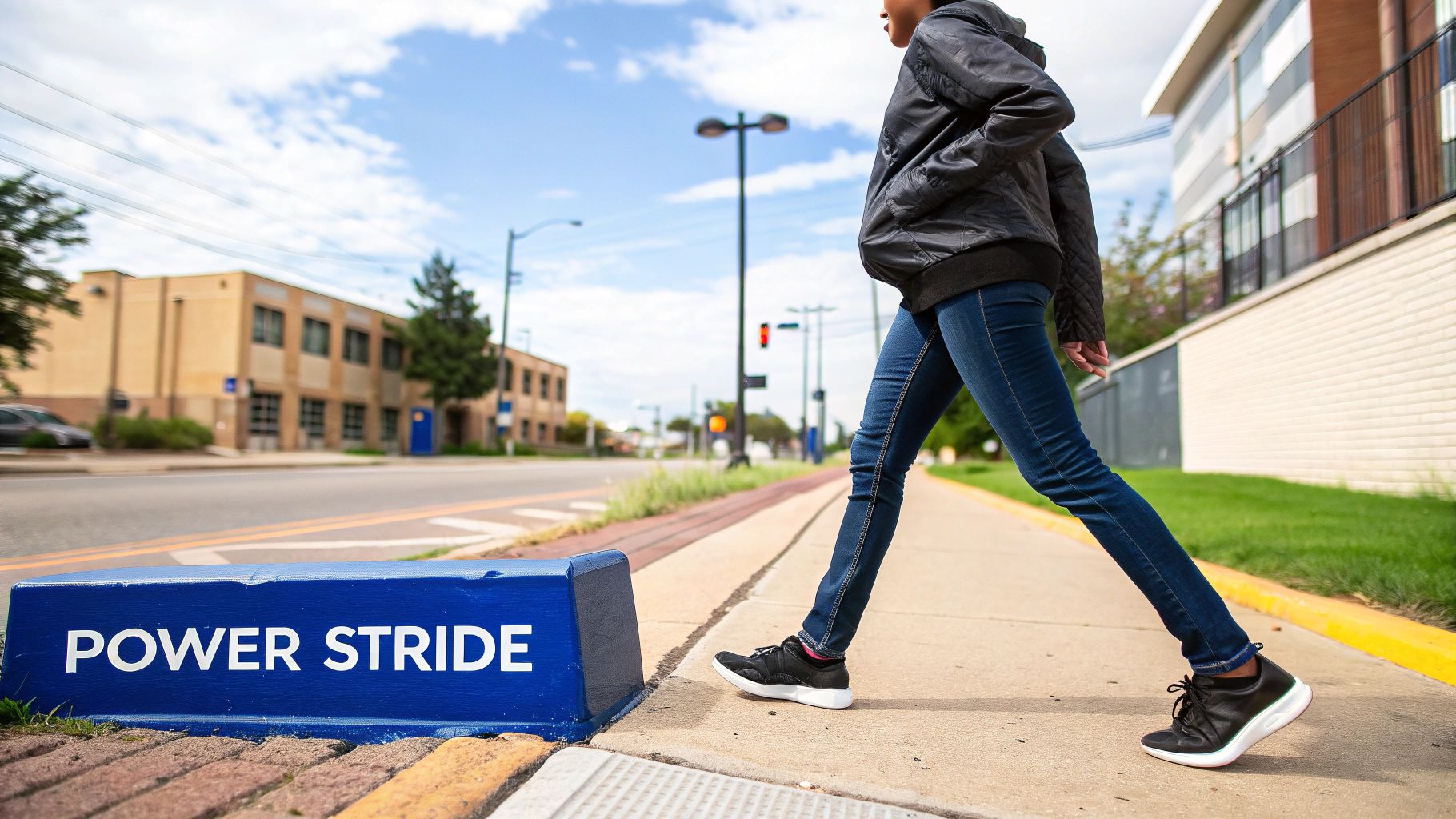
Here’s the truth: a confident walk starts long before your feet hit the pavement. It’s an inside job. True self-assurance isn't just about how you stand; it's about cultivating a mindset that projects authority and calm without you even trying.
Think of this mental prep as your secret weapon. Before walking into a big meeting, take a moment. Visualize yourself moving with intention—head up, stride even, totally composed. This isn't just daydreaming; it's a mental rehearsal that gets your brain and body on the same page for success.
Adopt a Mindset of Purpose
Hesitation kills confidence. When you’re unsure where you’re going, your steps get shorter, your pace slows, and your eyes drift to the ground. The fix is deceptively simple: focus on your destination.
Instead of worrying about who might be watching, lock your eyes and your mind on where you're headed. This one mental switch shifts you from self-consciousness to purpose, and your body language has no choice but to follow. Your pace becomes decisive, and your gaze stays forward.
Pro Tip: Before you start walking, take a deep breath and set an intention. Literally tell yourself, "I'm walking to that coffee shop with purpose." This tiny mental cue is surprisingly effective at creating a more powerful, direct stride.
Even small rituals make a huge difference here. Ever heard of "power poses"? Standing with your hands on your hips for just a minute can actually shift your brain chemistry, making you feel more assertive. These are the foundational tricks that help you genuinely boost their self-confidence from the inside out.
How Your Environment Shapes Your Walk
It's tough to project ease when you feel on edge. Your sense of security is directly tied to your ability to walk with confidence. Feeling safe can be the difference between an open, relaxed posture and a guarded one.
This isn't just in your head. In 2023, while 70% of adults worldwide said they felt safe walking alone at night, that number hides massive regional differences. Our environment directly impacts how freely and confidently we move. Mastering your internal state gives you the power to project confidence even when the world around you feels uncertain.
Decoding Body Language for Total Self-Assurance
Your posture sets the stage, but your body language tells the real story. These small, non-verbal cues are what sell your confidence and make it feel authentic, not forced. Mastering how to walk with confidence is really about mastering these tiny movements that signal you're calm and in control.
It starts with your eyes. Where are you looking? Down at your feet? That’s a classic tell for uncertainty. Instead, get your eyes up and look ahead. Focus on the horizon. This simple shift signals you’re present, aware, and moving with intent.
The Little Details of Natural Movement
Confident body language is relaxed, not rigid. One of the biggest giveaways of anxiety is a stiff, awkward arm swing. The goal is a natural, fluid motion that comes from the shoulder, not a jerky pump from the elbow. Just let your arms move in sync with your stride.
Next, check your hands. Are they buried deep in your pockets? Clenched into tight fists? Both are defensive moves. Let them hang loosely at your sides, with your fingers gently curved. This small adjustment shows you’re open and at ease.
Key Insight: True self-assurance isn't about looking tough. It's about being genuinely comfortable in your own skin. Relaxed hands and a natural arm swing communicate this far better than any puffed-up chest ever could.
The Confidence Checklist
Use this quick guide to spot the difference between assured and anxious body language.
-
Assured Signal: A steady, unhurried pace.
- Anxious Signal: Rushing, or taking short, hesitant steps.
-
Assured Signal: Shoulders are back, but relaxed.
- Anxious Signal: Shoulders are hunched forward or pulled up tight.
-
Assured Signal: Hands are relaxed and move naturally.
- Anxious Signal: Fidgeting, clenching fists, or hiding hands.
Think about walking into a job interview. Stride in with your head up and a calm arm swing, and you immediately set a tone of competence. But shuffle in with clenched fists, and you’ve communicated nervousness before saying a word. The details make all the difference.
How Your Footwear Elevates Your Confidence
Let's get one thing straight: the right shoes are the literal foundation of a confident walk. They are your physical connection to the ground, and what you wear on your feet can either sabotage your efforts or amplify them tenfold.
Even a subtle increase in height is a game-changer. It forces a physical shift in your body, encouraging a more dominant, upright posture while delivering a serious psychological boost. This isn't just about fashion—it’s a strategic advantage.
The Modern Solution for Instant Posture Correction
For years, men who wanted this edge were stuck with bulky, obvious "lift" shoes that screamed insecurity. Forget that. Unlike awkward, old-school brands such as Chamaripa or Guidomaggi, Conzuri designs modern silhouettes that integrate a proprietary Invisi-Boost™ lift seamlessly.
The result? You get all the height and posture benefits, and absolutely no one knows your secret. It's the ultimate confidence hack.
The goal isn’t just to be taller; it’s to feel more powerful from the ground up. The right shoes provide a discreet lift that instantly corrects slouching, helping you stand straighter and project more authority.
This improvement in your stature creates a powerful ripple effect. When you stand taller, you feel more present and commanding. That internal feeling bleeds into your walk and body language, creating a positive feedback loop of pure self-assurance.
For guys on their feet all day, finding shoes that deliver this boost and support is non-negotiable. If that's you, check out our guide to the most comfortable dress shoes for work.
Choosing footwear like this isn’t vanity. It’s about leveraging every tool you have to build unshakeable confidence.
Common Questions About Walking With Confidence
As you start putting these ideas into practice, questions are bound to pop up. Here are some of the most common ones, with straight-up answers to keep you moving forward.
How Long Does it Take to Walk More Confidently?
This isn't an overnight fix. Building a confident walk is about creating new muscle memory. Most people report feeling a noticeable shift within a few weeks of consistent, mindful effort.
The trick is to not try and change everything at once. You'll just end up looking stiff and robotic. Instead, focus on one thing for a week. Maybe it's just keeping your head up. Once that feels natural, add relaxing your shoulders. This gradual approach lets your body adapt naturally.
Can Shoes Really Make a Difference in Confidence?
Absolutely. The right footwear is a game-changer, and the impact is both physical and mental.
Physically, the discreet lift inside Conzuri sneakers immediately improves your posture. It’s a subtle adjustment, but it makes you stand taller and straighter without even thinking about it.
That physical change creates a powerful psychological ripple effect. Standing taller makes you feel more present and commanding. This kicks off a positive feedback loop: you stand taller, which makes you feel more confident, and that confidence is projected right back out through your body language.
The most common mistake is overthinking it and appearing stiff or unnatural. Confidence is relaxed and fluid, not forced. It's about being comfortable in your own skin, not performing a rigid routine.
If you have more general questions, our main Conzuri frequently asked questions page covers everything from shipping to sizing. For a deeper dive, you might find useful answers in these additional frequently asked questions on confidence from other experts.
Ready to feel the difference a solid foundation can make? Conzuri designs footwear that gives you an immediate posture and confidence boost, completely discreetly.
Discover the full collection of height-boosting sneakers here.
Recent Articles


