


Ever felt like you could use a subtle height advantage to stand a bit taller and more confidently? It’s a common desire, but the solution isn’t magic—it’s a clever tool called a shoe lift. This specialized insole fits discreetly inside your shoe to add height or correct medical issues like a leg length difference. But is a simple insert the best way to get that boost?
This guide will break down exactly what shoe lifts are, why people use them, and compare them to a far superior, seamlessly integrated alternative.
What Is a Shoe Lift? A Simple Definition
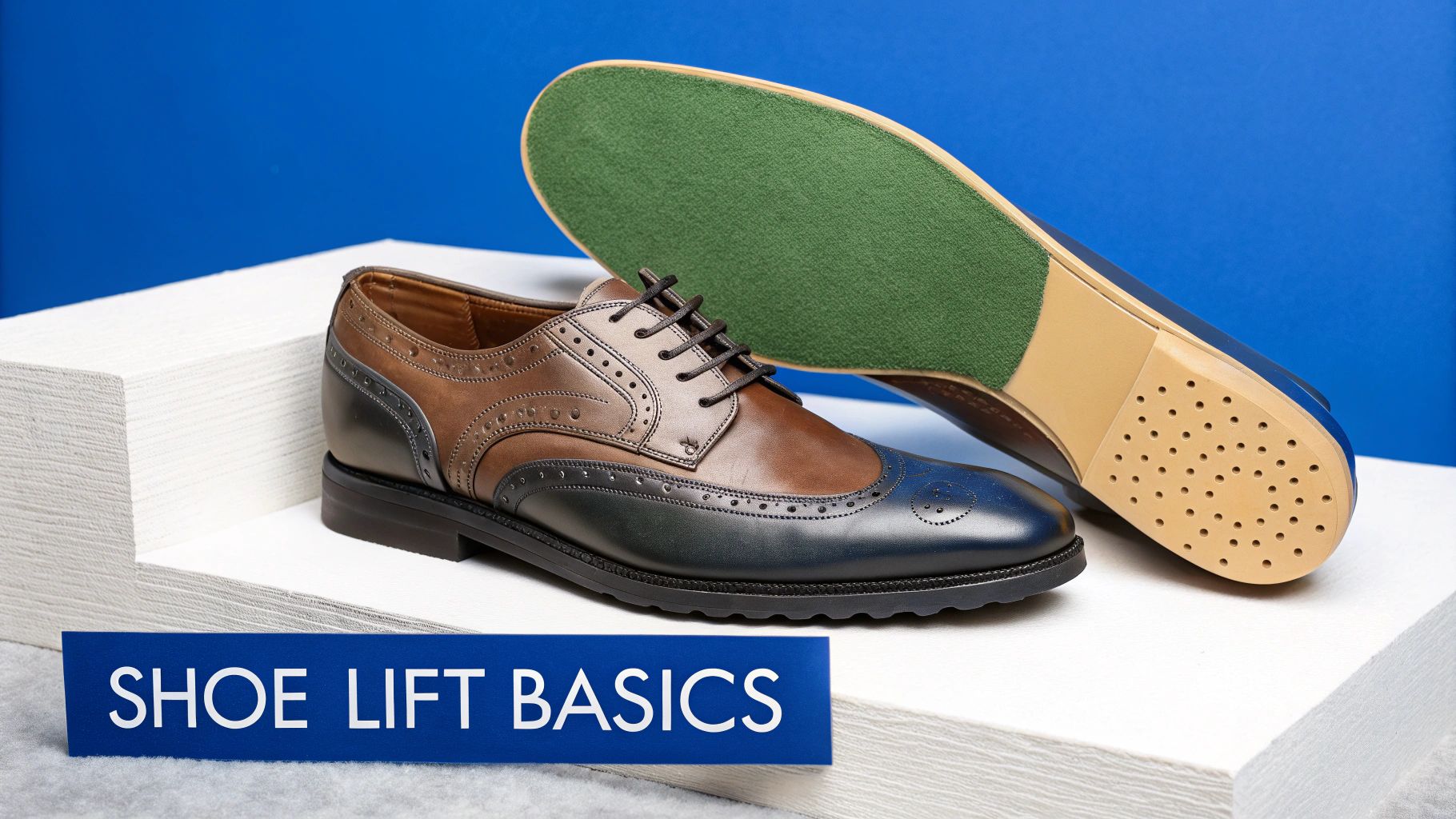
At its core, a shoe lift is a versatile accessory serving two main purposes: cosmetic enhancement and therapeutic correction. It's essentially a wedge, usually made from foam, gel, or cork, that elevates your heel from inside the shoe.
This simple lift accomplishes two key things:
- A Cosmetic Boost: For many men, adding an inch or two is a huge psychological win. It can change how you carry yourself in both professional and social situations. We dive deeper into this in our guide on shoe lifts for men.
- An Orthopedic Fix: Doctors often prescribe shoe lifts to correct a Leg Length Discrepancy (LLD). By leveling the hips, a lift can help relieve chronic back, hip, and knee pain caused by an imbalanced gait.
For a quick overview, here's what you need to know.
Shoe Lift Essentials at a Glance
| Aspect | Description |
|---|---|
| Primary Functions | Cosmetic height enhancement and medical correction for leg length discrepancies. |
| Common Materials | High-density foam, silicone gel, cork, and durable rubber compounds. |
| Key Benefits | Boosts confidence, improves posture, and can alleviate pain from skeletal imbalances. |
These little inserts can pack a big punch, whether you're using them for style or support.
The Growing Popularity of Lifts
It’s no surprise that the demand for these inserts is on the rise. More people are turning to them for both aesthetic and medical reasons, and the market numbers back this up.
The global orthotic insoles market, which includes shoe lifts, was valued at USD 3.36 billion in 2022. It’s projected to climb to nearly USD 5.78 billion by 2030. This growth is fueled by both an aging population with medical needs and a rising desire for a cosmetic edge in a competitive world.
This trend shows a growing recognition of the dual benefits: a subtle height increase and proper biomechanical support. While you can buy standalone lifts, the real innovation is in footwear with the technology built right in.
Unlike traditional brands, Conzuri designs elevator shoes with integrated lifts that offer far superior comfort and are completely undetectable. You get the height, without the hassle.
Why People Use Shoe Lifts: The Core Motivations
So, why do people actually use shoe lifts? It really boils down to two things: the desire to feel more confident and the need for physical comfort.
On one hand, you have the cosmetic boost. On the other, you have therapeutic correction. Both are valid reasons guys turn to lifts to get a little more out of their footwear. For many men, the biggest draw is the psychological edge that comes with extra height. We’re not just talking about a number; it’s about how that subtle lift changes your entire presence.
An extra inch or two can make a surprising difference in your posture. It naturally encourages you to stand taller and pull your shoulders back. This creates a more commanding frame, whether you're leading a meeting or just walking into a room. The result? A real, tangible spike in self-esteem.
The Cosmetic Edge: Confidence in Every Step
There’s a well-known link between height and confidence. A little elevation can shift how you see yourself, and in turn, how others see you. That's the real magic behind the cosmetic benefit—it’s an instant upgrade to how you carry yourself.
The real power of a shoe lift lies in its subtlety. It provides a discreet boost that enhances your natural stature, allowing you to project authority and assurance without drawing unwanted attention to your footwear.
This is exactly why a well-designed lift is so important. Unlike clunky, obvious solutions, a modern lift makes the added height feel seamless. You feel taller, stand straighter, and carry yourself with an authority that feels like it was there all along.
For a complete rundown, check out our ultimate guide to insoles for height for men.
Medical and Therapeutic Applications
Beyond the confidence boost, shoe lifts are a serious tool in orthopedic medicine. Their most common job is to correct Leg Length Discrepancy (LLD)—a condition where one leg is shorter than the other. Even a small imbalance can set off a chain reaction of problems.
An LLD can mess with your gait. This often leads to chronic pain in your hips, knees, and back. By slipping a lift into the shoe of the shorter leg, a doctor can level out the pelvis, realign the spine, and get rid of that nagging pain.
It's a surprisingly simple, non-invasive fix. This makes shoe lifts a first-line treatment for restoring mobility and comfort for people dealing with LLD.
Choosing The Right Type Of Shoe Lift
Not all shoe lifts are created equal. Picking the right one comes down to what you’re trying to achieve. The decision boils down to two things: the type of lift and the material it’s made from. Each combination offers a totally different experience in comfort, support, and discretion.
First, let's look at the main styles.
- Full-length insoles give you a gradual, supportive lift from heel to toe. This tends to feel more natural underfoot.
- Heel-only lifts are more targeted, giving you that height boost just at the back.
- Adjustable lifts are stackable layers that let you dial in the exact height you want.
Finding The Perfect Material
The material of your shoe lift makes a huge difference in how it feels and holds up. Think of it as a trade-off between soft cushioning, long-term durability, and solid support. Here’s a look at the most common materials and what they bring to the table.
Comparing Common Shoe Lift Materials
The right material is a personal choice, balancing how it feels against how long you need it to last. This table breaks down the pros and cons of the most popular options out there.
| Material | Comfort Level | Durability | Best For |
|---|---|---|---|
| Gel | High | Low-Medium | All-day cushioning and absorbing impact during walks. |
| Foam | Medium-High | Medium | A great all-rounder for daily wear; balances comfort and support. |
| Rubber | Low | High | Maximum stability and longevity; a firm, no-nonsense lift. |
| Cork | Medium | High | Breathable support that molds to your foot over time. |
As you can see, there’s no single "best" material—it's all about what feels right for you and fits your lifestyle.
The infographic below shows the maximum height you can generally expect from different lift styles.
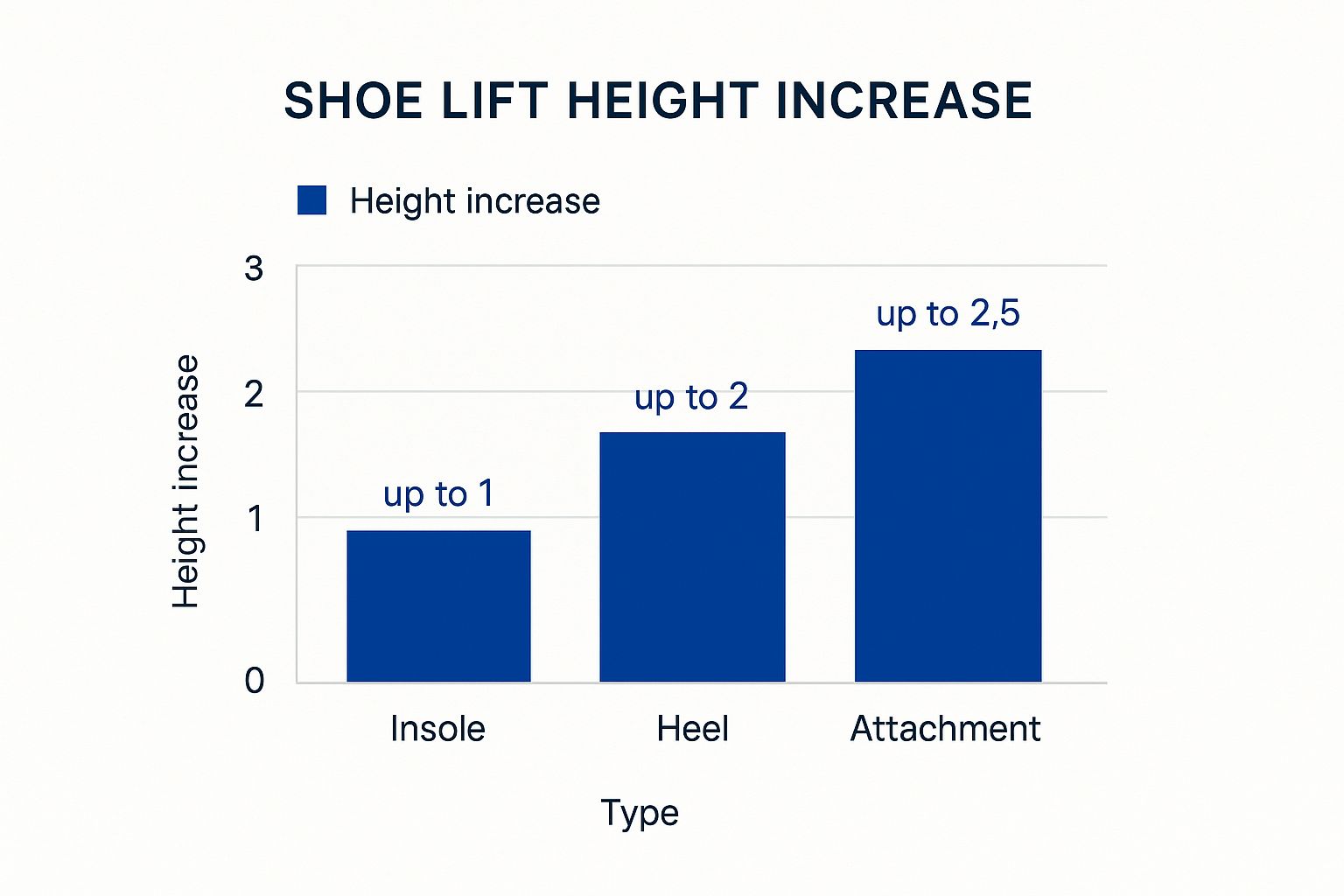
It’s clear that attachments and heel-only lifts can offer more height. However, that extra lift often comes at the cost of stability and comfort.
Here's the bottom line: while separate insoles offer flexibility, they have a bad habit of shifting inside your shoe. This creates an unstable, uncomfortable feeling underfoot—a common complaint with older brands like Chamaripa.
For a truly seamless experience, nothing beats shoes with integrated lifts. They are engineered from the ground up for perfect balance, discretion, and all-day comfort. To see how built-in solutions really stack up, check out our guide to the best elevator shoes for men.
How to Wear Shoe Lifts for the Best Results
So you’ve got a pair of shoe lifts. Tossing them in your shoes sounds easy enough. But there’s an art to it if you want to look natural and stay comfortable. The secret is starting slow and picking the right shoes.
When you're just starting out, think subtle. A lift between 0.5 to 1 inch is the perfect entry point. This small boost gives your body time to adjust to a new posture and stride. Jumping straight to a 2-inch lift is a rookie mistake. It can strain your muscles and make your walk look stiff and unnatural.
Pairing Lifts with the Right Shoes
The shoes you choose can make or break the entire experience. Lifts work best inside footwear with plenty of room and solid ankle support. We're talking high-top sneakers, boots, or any shoe with a firm, structured heel. This is non-negotiable because it locks your heel in place and prevents it from slipping out—a dead giveaway.
On the other hand, low-cut shoes like loafers or boat shoes are a terrible match. The lift will likely push your heel up and over the shoe’s collar. This looks awkward and feels incredibly unstable. For a completely seamless look, you need a shoe that can hide both your foot and the lift.
Pro Tip: Before you wear them out for a full day, take your new lifts for a test drive around the house. This break-in period lets your body get used to the feel. It helps you make sure the insert isn't shifting or causing pressure points.
Avoiding Common Mistakes
To keep things discreet and comfortable, steer clear of these common slip-ups:
- Going Too High for Your Shoe: Never cram a tall lift into a shoe that can't handle it. You’ll squish your toes and have your heel popping out with every step.
- Skipping the Break-In Period: Be patient. Give your feet, ankles, and back a few days to get used to the new alignment. Start by wearing them for just a couple of hours at a time.
- Choosing the Wrong Footwear: I'll say it again—pairing lifts with low-profile shoes is a recipe for disaster. You'll sacrifice stability and the natural look you're going for.
Nail these basics, and you'll be able to wear your lifts with total confidence. For more strategies to discreetly add a few inches, check out our full guide on how to look taller in shoes.
Shoe Lifts vs. Integrated Elevator Shoes: The Ultimate Showdown
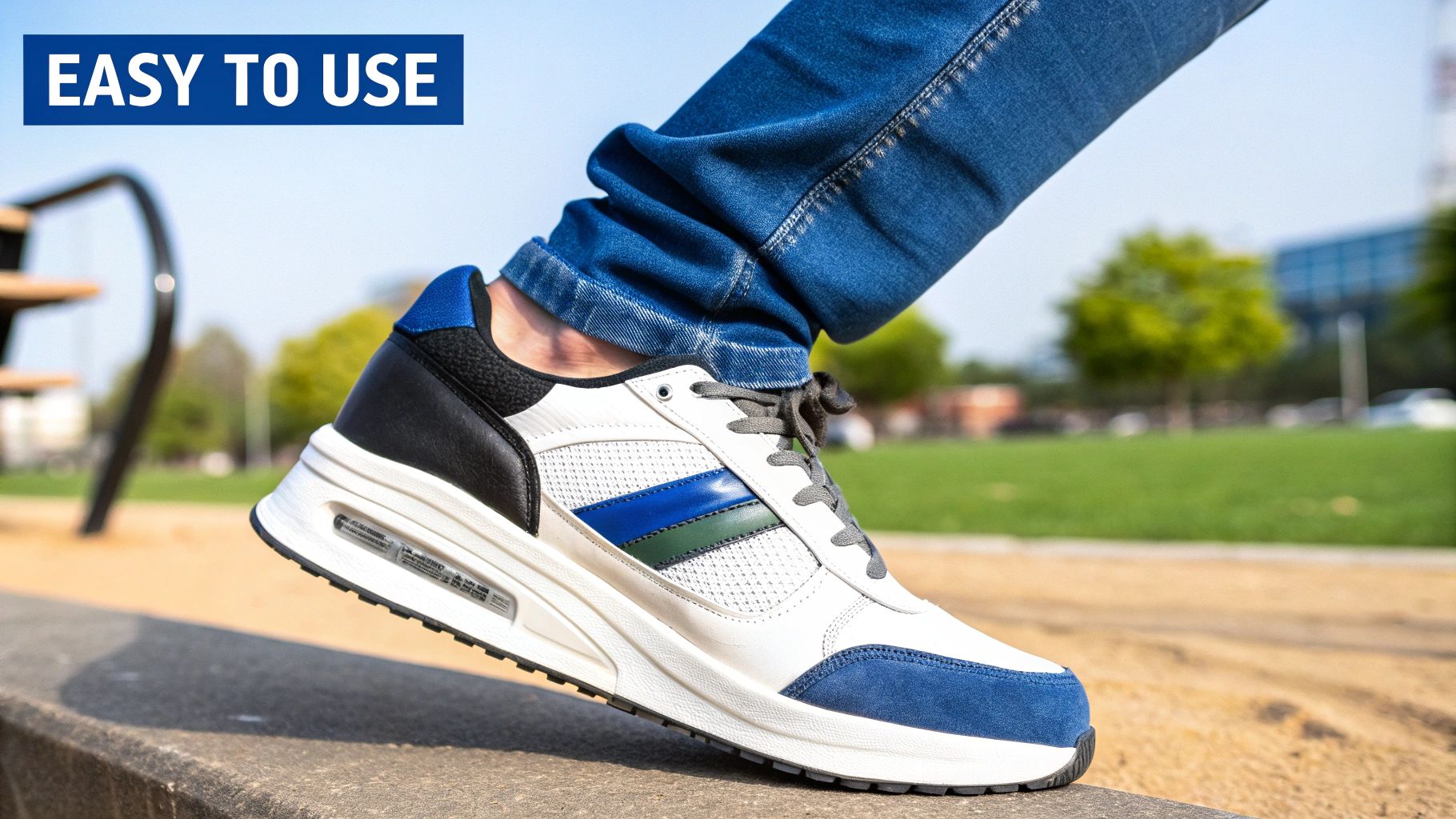
Anyone who's tried a separate shoe lift knows the struggle. While they promise a quick height boost, the reality is often frustrating. The insert slides around. Your foot feels unstable. Your toes get jammed into the front of your shoe. It’s a clumsy, makeshift fix that trades comfort for a couple of inches.
But what if the lift wasn't an afterthought? What if it was part of the shoe's DNA?
That’s the core difference with integrated elevator shoes. Think of it this way: you can slap a cheap spoiler on a standard car, or you can drive a sports car designed from the chassis up for performance. One is a clunky add-on; the other is engineered for a seamless, powerful experience.
The Engineering Advantage of Integrated Lifts
Conzuri elevator shoes are built with an invisible lift fused into the shoe’s core structure. It’s not just an insert we toss in; it’s the foundation of the entire design. This integrated approach solves all the problems that plague separate lifts.
- Completely Undetectable: The lift is buried deep within the sole. From the outside, all anyone sees is a stylish, well-proportioned shoe.
- True All-Day Comfort: The shoe is molded around the lift. This creates an ergonomic footbed that supports your arch and cushions your heel. No awkward angles, no pain.
- Uncompromised Style: The shoe’s silhouette stays clean and sharp. You get the height without the bulky, orthopedic look that screams “I’m wearing lifts!”
An integrated lift means every part of the shoe—from the outsole to the laces—is designed to work together. This creates a stable, comfortable, and confident boost without any of the tell-tale signs of a cheap insert.
When you understand the different shoe construction techniques, it becomes obvious why a shoe built with the lift in mind is fundamentally better.
Ultimately, you’re choosing between a temporary hack and a permanent solution. For a reliable, invisible height increase that feels as good as it looks, the modern engineering of an elevator shoe is the only way to go.
Want to see exactly how this tech works its magic? Check out our full guide on how elevator shoes are explained.
Common Questions About Shoe Lifts
Jumping into the world of shoe lifts? You've probably got a few questions. From whether they're safe to how discreet they really are, it’s smart to get the facts straight. Here are the honest answers to what guys usually ask.
Are Shoe Lifts Bad for Your Feet?
When used the right way, shoe lifts are perfectly safe. If you have a diagnosed leg length discrepancy, they’re not just safe—they’re a game-changer. For a cosmetic height boost, the key is to be smart about it. Start low and make sure your shoes can handle the lift without cramping your foot.
Where guys go wrong is stuffing a lift that’s too high into a shoe that can’t support it. That’s what causes discomfort and throws off your balance. This is exactly where integrated solutions, like Conzuri elevator shoes, come in. They’re engineered with the right ergonomic support from day one, so there's zero risk of a bad fit.
How Much Height Can You Realistically Add?
With a simple, standalone shoe lift, you can realistically add between 0.5 and 2 inches. Try to push it past that, and you'll run into problems. We’re talking instability, an awkward walk, and your heel popping out of your shoe. It’s a dead giveaway.
If you’re looking for a more significant boost that stays completely under the radar, purpose-built elevator shoes are the only way to go. They’re designed from the ground up to add as much as 3 inches while keeping you comfortable and looking completely natural.
Will People Notice I'm Wearing Shoe Lifts?
Discretion is everything. Shove a clunky lift into the wrong pair of shoes, and yeah, people will notice your heel is sitting way too high. The trick is to use a moderate lift and stick to footwear that can conceal it, like boots or high-tops with solid ankle coverage.
But if you want a truly undetectable solution? It has to be an integrated elevator shoe. The lift is built right into the sole’s structure, making the extra height invisible to everyone but you.
Can I Put Shoe Lifts in Any Shoe?
Nope. This is a common mistake. They work best in shoes with a high back and structured ankle support. Trying to cram them into low-cut shoes like loafers or boat shoes is a recipe for disaster—your heel will slip right out, and it just looks off.
A separate lift is a temporary fix with too many compromises. For a reliable, stylish, and completely invisible height boost that works every time, the engineered solution is always better.
Explore our collections of elevator dress shoes and sneakers that deliver a seamless boost without any of the guesswork.
Recent Articles


