


That throbbing ache in your arches after a long shift. That nagging lower back pain that just won't quit. Sound familiar? If you spend your days on your feet, you know this feeling all too well. It’s the brutal reality of a demanding job, but here’s the secret: the pain isn’t the problem, your shoes are.
Most work shoes are an afterthought—built for looks, not for the grueling reality of standing on concrete for 8+ hours. They fail to support your body's foundation, leading to fatigue, chronic pain, and a serious drain on your energy.
But what if you could find a shoe that not only eliminates that end-of-day agony but also elevates your style and confidence? In this guide, we'll break down the science of all-day comfort, reveal what makes a truly great work shoe, and show you how to find the perfect pair that works as hard as you do.
Why Your Feet Hurt After a Long Shift (It's Not Your Fault)
You know the feeling. A dull, throbbing ache that starts in your heels and radiates up your entire body. It’s the unofficial signal that your shift is over, but the pain is just getting started. If this is your reality, you’re not just tired—your shoes are actively working against you.
The hard truth is that most stylish shoes are designed for sitting, not standing. When you stand on hard, unforgiving surfaces, your muscles are in a constant state of tension just to keep you upright. This static load restricts blood flow, leading directly to muscle fatigue and that dreaded swelling.
The Biomechanics of Pain: What’s Really Happening
When you stand all day, your feet bear the full force of your body weight. Most standard shoes, especially flat, flimsy ones, fail to distribute that pressure evenly. Instead, the force concentrates on two small areas: your heels and the balls of your feet. This is ground zero for a host of common foot problems.
This is how conditions like plantar fasciitis—that sharp, stabbing pain near your heel—begin. The plantar fascia ligament, which supports your arch, becomes overworked and inflamed from the strain, turning every step into a nightmare. A 2014 study in the Journal of Foot and Ankle Research confirmed a direct link between prolonged standing at work and increased plantar heel pain.
Key Takeaway: End-of-day foot pain isn’t a sign of weakness. It's a clear signal from your body that your footwear is failing to provide the crucial ergonomic support you need.
It's a Chain Reaction: More Than Just Sore Feet
The problem doesn't stop at your ankles. Poor foot support creates a domino effect up your entire kinetic chain. When your feet are unstable, your posture has to compensate. Your knees, hips, and spine are thrown out of alignment, placing immense stress on them. That nagging lower back pain you blame on your job? It almost always starts with your shoes. To get a handle on this, check our in-depth guide on how to maintain good posture.
Too many men are stuck in a no-win situation: look good and feel terrible, or feel good and sacrifice style. It’s a compromise that leads to chronic pain and impacts your work, confidence, and life outside the job.
This is exactly where Conzuri comes in. Unlike traditional brands such as Chamaripa, Conzuri designs modern silhouettes that blend seamlessly into any wardrobe. Our proprietary Invisi-Boost™ technology isn't just about a subtle height increase; it's an ergonomic system engineered for superior, all-day support that attacks the root cause of pain and fatigue. It's the solution that proves you never have to choose.
The Anatomy of a Perfect Work Shoe for Standing
So, what transforms a regular shoe into one of the best work shoes for standing? It’s not about a soft, squishy insole. It's a complete architectural system designed to support your body from the ground up and take the strain out of every hour you spend on your feet.
Once you understand this anatomy, you can see past the marketing fluff and identify footwear built for real-world performance. The right shoe keeps you supported long after a grueling shift on concrete floors. It’s a system of components working in harmony.
The Non-Negotiable Foundation of All-Day Comfort
At the core of any great work shoe is a solid support structure. And no, this isn't just about cushioning—it’s about control, stability, and proper alignment.
Here are the non-negotiables:
- Structured Arch Support: This is the MVP. Proper arch support distributes your body weight evenly across your foot, taking immense pressure off your heel and forefoot to prevent conditions like plantar fasciitis.
- Shock-Absorbing Midsoles: This is your shoe's suspension. Materials like EVA (Ethylene Vinyl Acetate) foam absorb the constant impact of walking on hard surfaces, protecting your joints—ankles, knees, and even your hips—from repetitive stress.
- A Secure Heel Counter: That firm cup at the back of the shoe? That's the heel counter. It's vital for locking your heel in place, preventing slippage and providing the stability needed to reduce the risk of ankle rolls.
- A Wider Toe Box: Your toes need room to spread out naturally as you stand and move. A cramped toe box is a fast track to blisters, bunions, and misery. A wider design allows your forefoot to function as nature intended.
These features work together to create an ergonomic environment for your feet. And the data shows just how big of a difference this can make.
Take a look at how ergonomically designed shoes can dramatically improve well-being on the job.
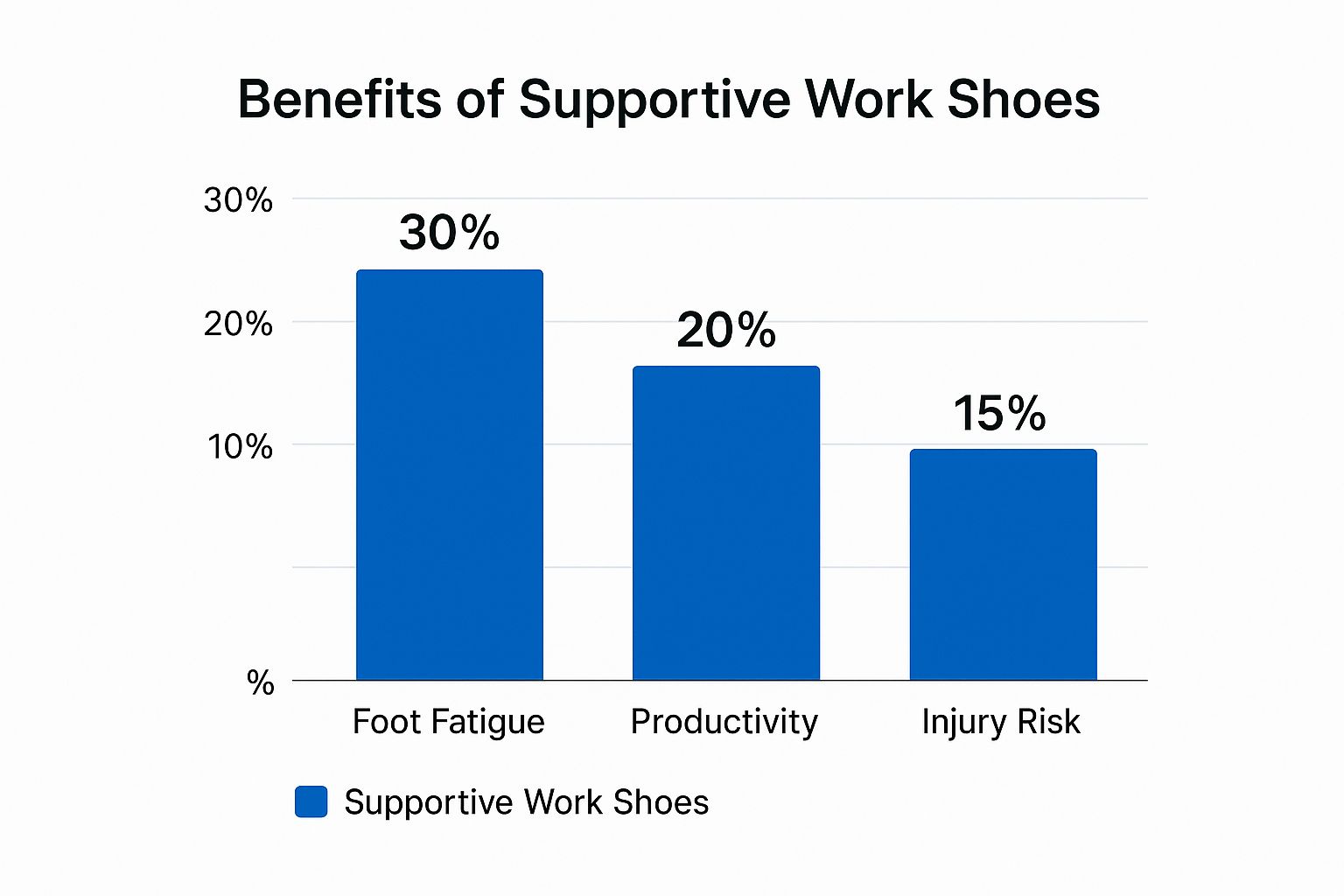
The numbers are clear: investing in the right footwear pays off in both health and performance.
Key Ergonomic Features for Standing Shoes Explained
To make it even clearer, let's break down the most critical components of a supportive work shoe. This table shows you exactly what each feature does and why it's a game-changer when you're on your feet all day.
| Feature | What It Does | Why It Matters for Standing |
|---|---|---|
| Arch Support | Distributes body weight evenly across the foot's arch. | Prevents arch collapse and conditions like plantar fasciitis from constant pressure. |
| Shock-Absorbing Midsole | Cushions the foot from impact with hard surfaces like concrete. | Reduces stress on your ankles, knees, and hips, minimizing joint pain. |
| Secure Heel Counter | Grips the heel firmly to prevent slipping and movement. | Provides stability, reduces the risk of ankle sprains, and ensures a proper gait. |
| Wide Toe Box | Allows toes to splay and spread naturally. | Prevents cramping, blisters, and bunions by giving your forefoot adequate room. |
| Cushioned Insole | Provides an initial layer of soft comfort underfoot. | Delivers immediate relief and reduces initial foot fatigue during long shifts. |
Having these features isn't just a "nice-to-have"—it's the difference between ending your day in pain and feeling ready for what's next.
Beyond the Basics: What Really Sets a Shoe Apart
While those core components are crucial, a few other details separate the good shoes from the great ones. Standing for hours on end creates serious foot fatigue. In fact, studies show that workers on their feet for more than four hours a day experience discomfort that tanks both their health and productivity.
This is why ergonomically designed work shoes have become so common, correlating with a workplace injury reduction of up to 20-30% in industries that invest in them. Learn more about these global footwear industry findings.
This is exactly where Conzuri's design philosophy comes in. Unlike traditional brands that often make you choose between comfort and style, our shoes are engineered with these anatomical principles from the start.
We combine premium materials with our Invisi-Boost™ technology. This doesn't just provide a discreet height increase; it includes an ergonomically contoured footbed that supports your arch and cushions your heel all day long. It’s a complete system designed for guys who demand both performance and a modern look.
Choosing Materials for Comfort and Durability
The material your shoes are made from is your first line of defense against a miserable day. It dictates everything from breathability and flexibility to whether your investment will last six months or six years. It’s a make-or-break decision.
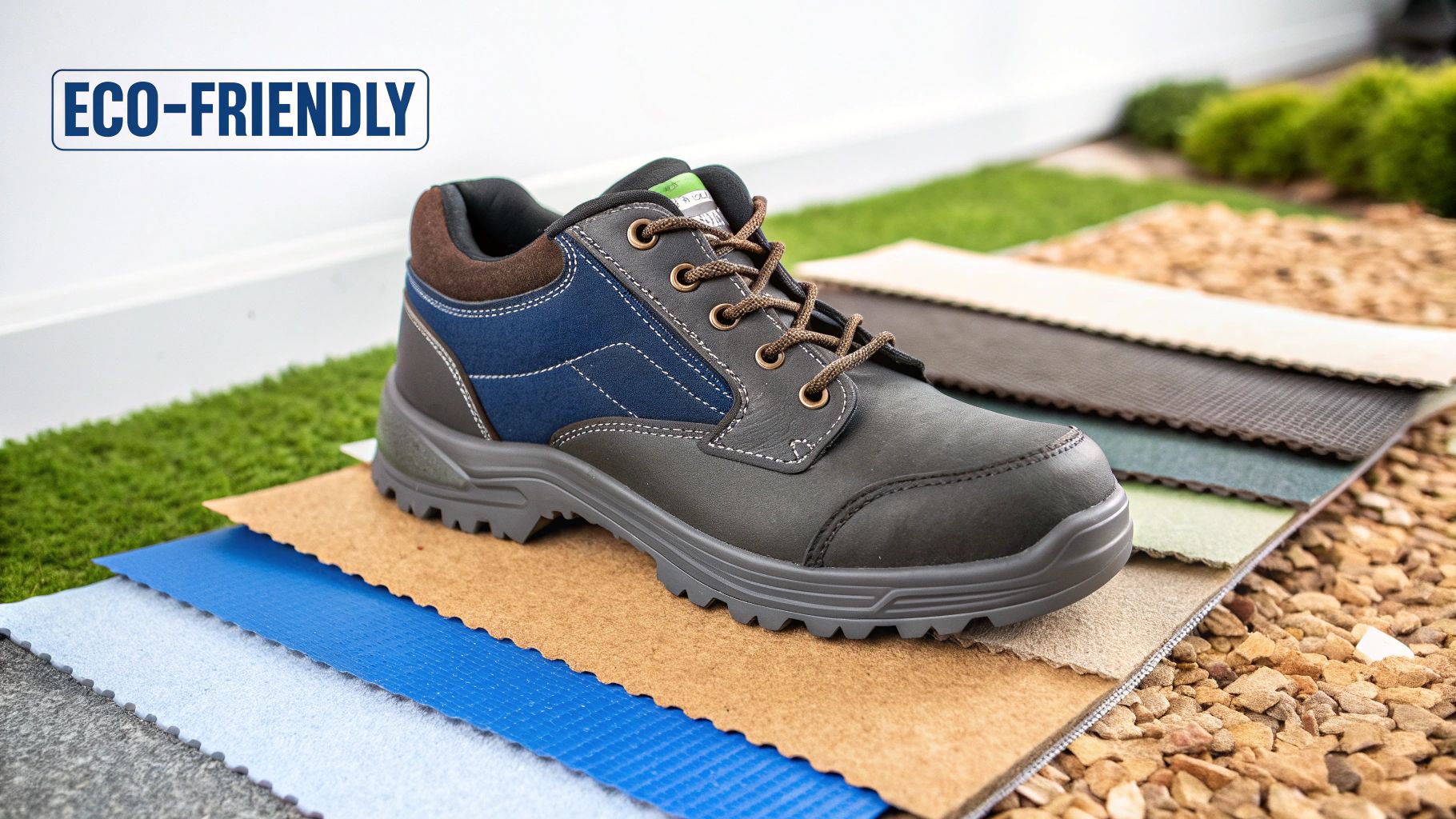
Let's start with the classic: full-grain leather. This is the gold standard for a reason. It's incredibly durable, but over time it molds to the specific shape of your foot, creating a custom-like fit. Unlike cheaper leathers, full-grain leather breathes, which helps regulate temperature and prevent sweaty feet. A well-kept pair is a long-term investment that stands up to daily abuse.
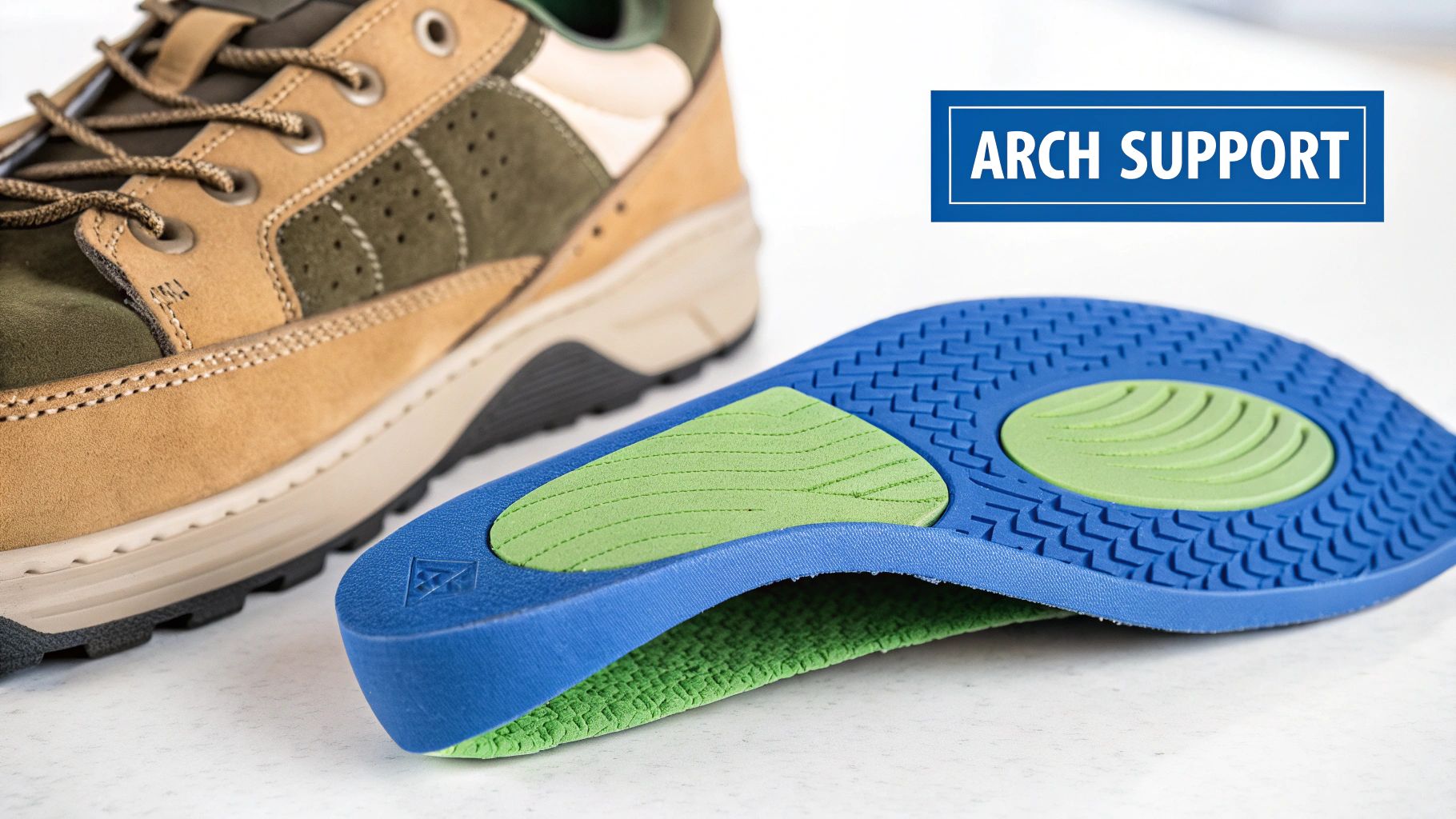
On the flip side, you have modern mesh fabrics. If you work in a warm environment or just tend to run hot, mesh is your best friend. The airflow is exceptional, preventing the sweat and friction that lead to blisters. While not as tough as thick leather, quality engineered mesh is surprisingly resilient and keeps the shoe feeling lightweight and flexible.
Advanced Synthetics: The Best of Both Worlds?
This is where footwear technology gets exciting. Engineered synthetic materials can blend benefits you can’t always find in a single natural material.
These advanced fabrics can be designed to be:
- Lightweight: To reduce the shoe’s overall weight and minimize leg fatigue by the end of the day.
- Water-Resistant: A built-in waterproof membrane is a lifesaver if you work outdoors or in environments with frequent spills.
- Supportive: They can create a solid, structured frame for the foot without the bulk and break-in period of traditional leather.
Pro Tip: Look for shoes with a hybrid construction. A tough leather exterior paired with a breathable mesh lining often delivers the perfect balance of longevity and all-day comfort.
This is exactly how we think at Conzuri. We're meticulous about our materials because we know they have to perform. Our sneakers, for example, often combine supple, high-grade leathers with strategically placed breathable panels. The result is footwear that not only looks sharp but also withstands the daily grind while keeping your feet dry and comfortable.
Ultimately, the right materials must work in synergy with the shoe's internal design to deliver real support. It's a concept we dive deeper into in our guide to the best walking shoes with arch support.
So, what’s the final call? For maximum durability and a timeless look, you can’t go wrong with full-grain leather. But if you’re battling heat and need superior breathability, a modern mesh or a high-tech synthetic blend is the smarter choice.
How to Find Your Perfect Fit (And Avoid Buyer’s Remorse)
Even the most technologically advanced, ergonomically engineered shoe on the market is a total failure if the fit is wrong. It’s the single most important detail for all-day comfort, and it’s the one most people get wrong. Nailing the fit is what separates you from ending a shift with energy to spare versus limping home with painful blisters.
First, let's bust a common myth: the "painful break-in period." While a quality leather shoe will mold to your foot over time, it should never cause actual pain out of the box. A little stiffness is normal. But any pinching, cramping, or harsh rubbing is a huge red flag telling you to walk away.
Nail the Basics of a Perfect Fit
Finding your true size isn’t hard, but it requires a little strategy. Your feet change size throughout the day, so timing is everything.
Here’s a simple trick that works every time: measure your feet in the evening. After being on them all day, your feet naturally swell to their largest size. Measuring them then ensures the shoes that feel great in the morning don't become a torture device by lunchtime.
Use these simple, real-world checks when trying on any pair:
- The Thumb Rule: Leave about a thumb's width (around half an inch) of space between your longest toe and the end of the shoe. Your toes need room to splay naturally.
- The Heel-Lock Check: Your heel should feel snug and secure, not slipping out with every step. A tiny bit of movement is fine, but if your heel is sliding up and down, you're signing up for blisters.
- The No-Pinch Zone: Pay close attention to the widest part of your foot. The shoe should feel comfortably snug, not tight. If you feel any pinching, it's too narrow for your foot shape.
Key Insight: A proper fit is the foundation of good posture. When shoes are too tight or loose, they disrupt your natural gait, sending a ripple effect of strain up your knees, hips, and back.
This is a core principle behind all Conzuri footwear. We design our shoes, including our best-selling elevator sneakers, on an anatomical last to deliver a secure, comfortable fit from the very first wear.
Beyond Length: Why Width and Volume Matter
Your foot size isn't just a number; it's a three-dimensional shape. A common mistake is going up a full size to accommodate a wider foot. This just leads to a shoe that’s too long, creating a tripping hazard and causing that dreaded heel slippage.
If you have wider feet, always look for brands that offer specific width options. This guarantees the fit is correct in both length and overall volume. The right width prevents your foot from being compressed, which improves circulation and makes a huge difference in fatigue levels at the end of a long day.
Marrying All-Day Comfort with Modern Style
For too long, finding the best work shoes for standing felt like an impossible choice. You either opted for clunky, orthopedic-looking shoes for comfort, or you chose style and silently paid the price with aching feet by 3 PM.
The good news? That era is over.
Modern footwear engineering has finally caught up. Now, you can get sleek, professional designs secretly packed with serious ergonomic support. You no longer have to sacrifice your personal style for your well-being. The trick is knowing what to look for.
How to Pair Support with Professionalism
Supportive shoes used to mean one thing: ugly. Not anymore. Today's market is full of options that blend seamlessly into a professional or business casual wardrobe.
- Sleek Leather Sneakers: A clean, minimalist sneaker in white or black is a modern classic. They look sharp with everything from chinos and tailored trousers to even a contemporary suit, giving you a stylish edge without screaming "comfort shoes."
- Versatile Chelsea Boots: Look for a pair with a solid, supportive footbed and a shock-absorbing sole. The silhouette is sophisticated enough for the office but cool enough for after-work drinks.
- Modern Loafers: Brands are finally building loafers with real arch support and cushioned insoles. These are perfect for business casual settings where you need to look polished but can't afford to be uncomfortable.
This isn't just a niche trend; it's a huge shift in the footwear industry. The global market for work shoes is booming, with projections expected to hit around USD 460.4 million in 2025. A massive driver for this growth is the demand for shoes that fuse ergonomic design with a clean, modern aesthetic.
It's simple proof that function and fashion can finally coexist. You can have a shoe that gets you through a 10-hour day and still looks great with your best outfits.
The Conzuri Advantage: A Discreet Boost in Confidence
This is where Conzuri truly changes the game.
Most brands fall into one of two camps: comfort-only brands that ignore style, or fashion brands that pretend your feet don't matter. We merge both—and then add something more. All of our footwear is built with our signature Invisi-Boost™ technology.
This system doesn't just deliver incredible ergonomic support; it also provides a discreet height increase. It’s a unique combination that tackles the physical strain of being on your feet while giving you a subtle psychological edge. Knowing how to look taller in shoes often translates into feeling more confident and present in any professional setting.
It's a fusion of all-day comfort, modern style, and a confidence boost you simply won't find anywhere else.
Your Go-To Checklist for Buying the Best Work Shoes
Alright, let's cut through the noise. When you're ready to find that perfect pair of work shoes, you need a quick, no-nonsense checklist. Think of this as your final inspection before you commit—a way to ensure the shoes you're eyeing are actually built for the long haul.
Before you pull the trigger, make sure the shoe checks these boxes:
- A Cushioned, Supportive Midsole: Is it made from something like EVA foam? You need a material that absorbs shock, not one that sends it straight to your joints.
- Serious Arch Support: This is non-negotiable. Proper arch support distributes your weight evenly and is your best defense against plantar fasciitis.
- A Rock-Solid Heel Counter: Does the back of the shoe feel firm and structured? It should lock your heel in place to prevent instability and blisters.
- A Generous Toe Box: Your toes need space to splay naturally. If they feel pinched or crammed from the start, walk away.
- Tough but Breathable Materials: Look for high-quality leather or advanced synthetic fabrics that can take a beating while still letting your feet breathe.
And it’s not just us saying this. Recent data shows a massive 100% year-over-year jump in searches for 'non-slip work shoes,' signaling that men everywhere are finally demanding both safety and ergonomic support. Explore more insights on shifting work shoe trends.
It's no accident that Conzuri shoes are engineered to meet every single one of these points. We blend our supportive Invisi-Boost™ technology with clean, modern designs so you never have to choose between looking good and feeling good. For a deeper dive, check out The Ultimate Guide to Elevator Shoes.
Got Questions? We’ve Got Answers (FAQ)
Still weighing your options? Here are some of the most common questions we get from guys who are tired of ending their day with aching feet.
How often should I replace my work shoes for standing all day?
For any job where you're on your feet all day, plan on replacing your work shoes every 6 to 12 months. The outsole might still look fine, but the midsole cushioning—the part that absorbs shock—is the first thing to break down.
Once that crucial support degrades, you’ll start to feel that all-too-familiar fatigue and soreness creeping back in.
Think of it this way: The moment your feet start feeling drained again after a long shift, that’s your shoes telling you they’re done. The internal support has failed, and it’s officially time for a new pair.
Are running shoes good for standing all day?
Not really, and here’s why. Running shoes are brilliant pieces of engineering, but they're built for forward motion. They often lack the side-to-side stability and balanced support you need for standing in one place for hours.
Many running shoes also have a high "heel-to-toe drop," which can throw your posture out of alignment over a long day. A dedicated work shoe is designed for stable, all-day support across your entire foot—exactly what you need for an eight-hour shift on unforgiving floors.
What's the real difference between men's and women's work shoes?
It all comes down to the "last"—the anatomical mold the shoe is built around. Men's and women's feet aren't just scaled versions of each other; they have fundamental structural differences.
On average, women’s feet tend to be narrower in the heel and wider in the forefoot. Men's shoes are built on a last that reflects a different foot shape. That's why simply sizing down a men's shoe won’t give a woman the right ergonomic fit. It's a recipe for blisters and poor support.
Ready to stop compromising between comfort and style? You can have both. See what a difference engineered support makes and find a pair that feels as good as it looks.
Recent Articles


