


Got that box-fresh pair of leather dress shoes? The excitement is real. But so is the fear of the blisters, pinching, and pain that often follows. You’ve invested in quality footwear, and the last thing you want is for them to sit in your closet because the break-in process feels like a medieval torture device. We promise, there's a better way.
The secret isn’t some risky internet hack involving a freezer or a hairdryer. It’s about patience and a few simple, proven techniques that work with the leather, not against it. This guide will show you exactly how to mold those stiff new shoes into a perfect, custom-fit pair that feels as good as it looks.
Why a Slow Break-In Is Non-Negotiable
That initial stiffness in a quality leather shoe isn't a defect; it's a sign of durable materials designed to last for years. Think of it like a high-quality baseball glove. It’s tough and rigid at first, but with time and proper care, it becomes a supple, perfectly formed extension of you. Your shoes are no different.
Forcing the issue with a full day of wear is a recipe for disaster. The goal is to gently persuade the leather to conform to the unique contours of your feet. This patient approach prevents damage to the shoe's stitching and structure while saving your heels from a world of pain.
What Is a Realistic Break-In Timeline?
For a quality pair of leather dress shoes, you're looking at about 2 to 4 weeks for a complete break-in. This isn't a constant, painful process. It means wearing them for short, controlled periods until the stiff leather finally softens and molds to your foot's shape.
This process is what creates that bespoke, custom-fit feeling. It’s a crucial step, especially when adapting to footwear that changes your posture, like a new pair of elevator shoes. The shoe needs to learn your foot.
The initial snugness of a new dress shoe isn't a flaw; it's an opportunity. A proper break-in process transforms a stiff shoe into a bespoke piece of footwear that provides support and comfort for years.
How Shoe Construction Impacts Your Comfort
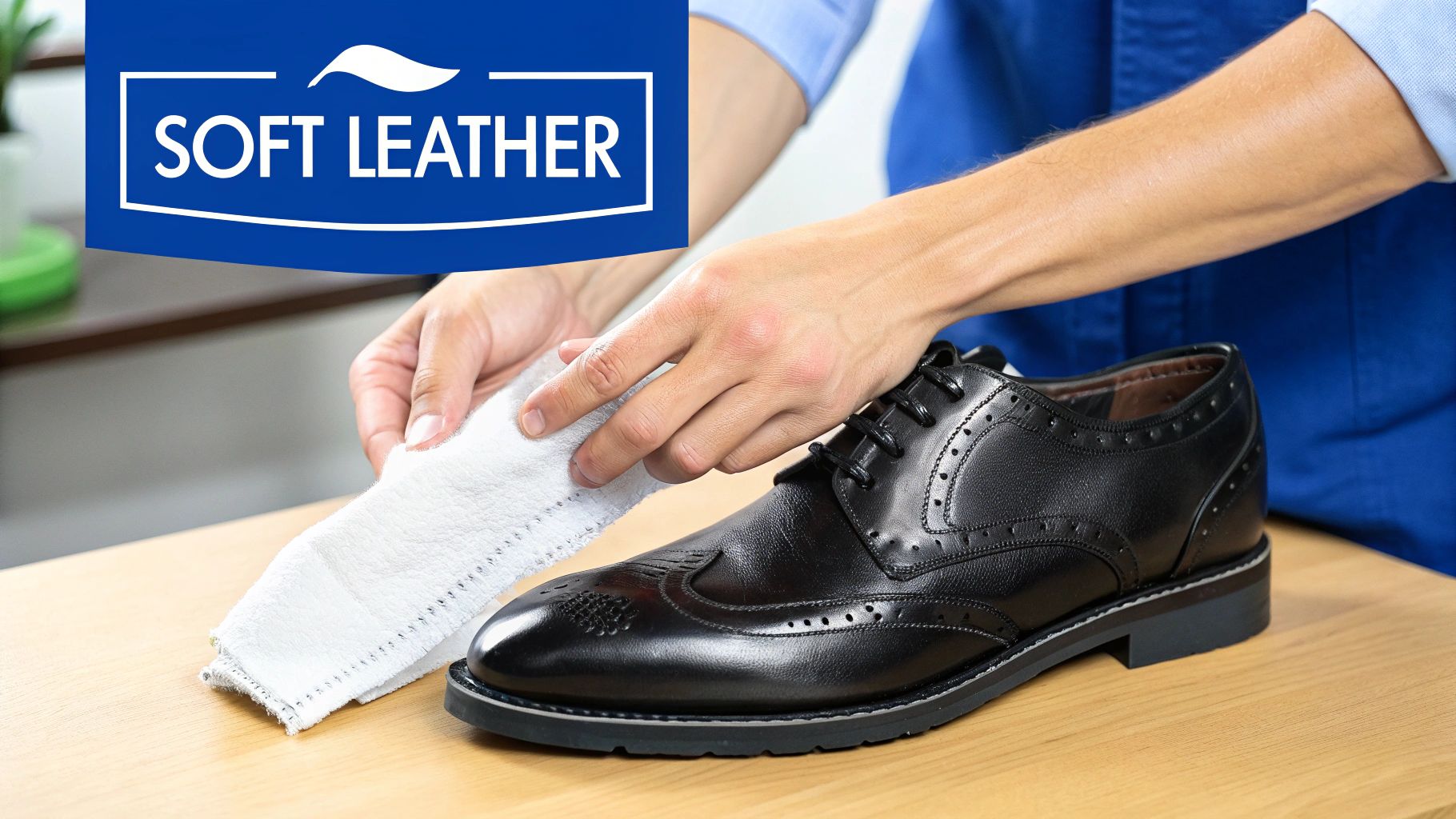
Not all dress shoes are created equal. The construction method—the shoe’s very DNA—is the single biggest factor determining how long the break-in period will last. Understanding this helps you set realistic expectations and choose the right strategy.
For instance, a flexible Blake-stitched shoe might feel comfortable in just a few wears. But a robust Goodyear-welted pair, known for its durability, could require several weeks of gradual effort before it truly feels like your own. Some experts say it's a full 30-day process.
Knowing what’s on your feet isn’t just trivia for enthusiasts; it’s practical knowledge for comfort.
Goodyear Welt vs. Blake Stitch: What's the Difference?
Let's break down the two most common construction types in plain English.
- A Goodyear welt is the heavyweight champion of shoe construction. It features a strip of leather (the welt) stitched around the shoe, connecting the upper to the sole. This creates a highly durable, water-resistant, and easily resoleable shoe. The downside? All those layers make it incredibly rigid out of the box. Patience is essential.
- The Blake stitch is a simpler, more streamlined method. The outsole is stitched directly to the insole and upper. This results in a lighter, more flexible shoe that requires a much shorter break-in period. The trade-off is less water resistance and a more complex resoling process.
Understanding your shoe's construction isn't just about showing off your knowledge. It’s about choosing the right break-in strategy and appreciating the craftsmanship you paid for.
No matter the construction, proper foot support is key. If you're seeking all-day comfort, explore our guide to the best walking shoes with arch support.
3 Gentle At-Home Methods for a Blister-Free Fit
Forget the "no pain, no gain" mantra. The smart way to break in dress shoes is to work with the leather, not against it. These simple, proven techniques done at home will give you that perfect, molded-to-your-foot feel without a single blister.
1. Start With Thick Socks
This is a classic for a reason. Grab your thickest pair of wool or athletic socks.
- Put them on, then slip into your new dress shoes.
- Walk around your house on a soft surface (like carpet) for 30-60 minutes.
- Repeat this daily for the first week.
The extra bulk from the socks applies gentle, even pressure from the inside, encouraging the leather to stretch and expand. It’s a controlled method that targets tight spots without warping the shoe's shape. This is a vital first step in creating comfortable dress shoes for standing all day.
2. Wear Them in Short, Strategic Bursts
The biggest mistake is wearing new shoes for an 8-hour day. Your feet, and your shoes, will hate you for it.
- Wear the shoes (with normal socks) around the house for 1-2 hours at a time.
- Your natural body heat will warm the leather, making it more pliable.
- As the leather warms, it begins to mold to the unique shape and flex points of your foot.
- Gradually increase the wear time each day.
This slow-and-steady approach lets the shoe adapt to you naturally.
3. Manually Work the Leather
Give the break-in process a head start before you even put the shoes on.
- Hold the shoe firmly in both hands.
- Gently bend and flex the sole back and forth, especially where your foot naturally creases.
- Use your thumbs to massage tight spots, like the heel counter or the sides of the toe box.
This simple action mimics the stress of walking, breaking down the initial stiffness in both the leather and the sole.
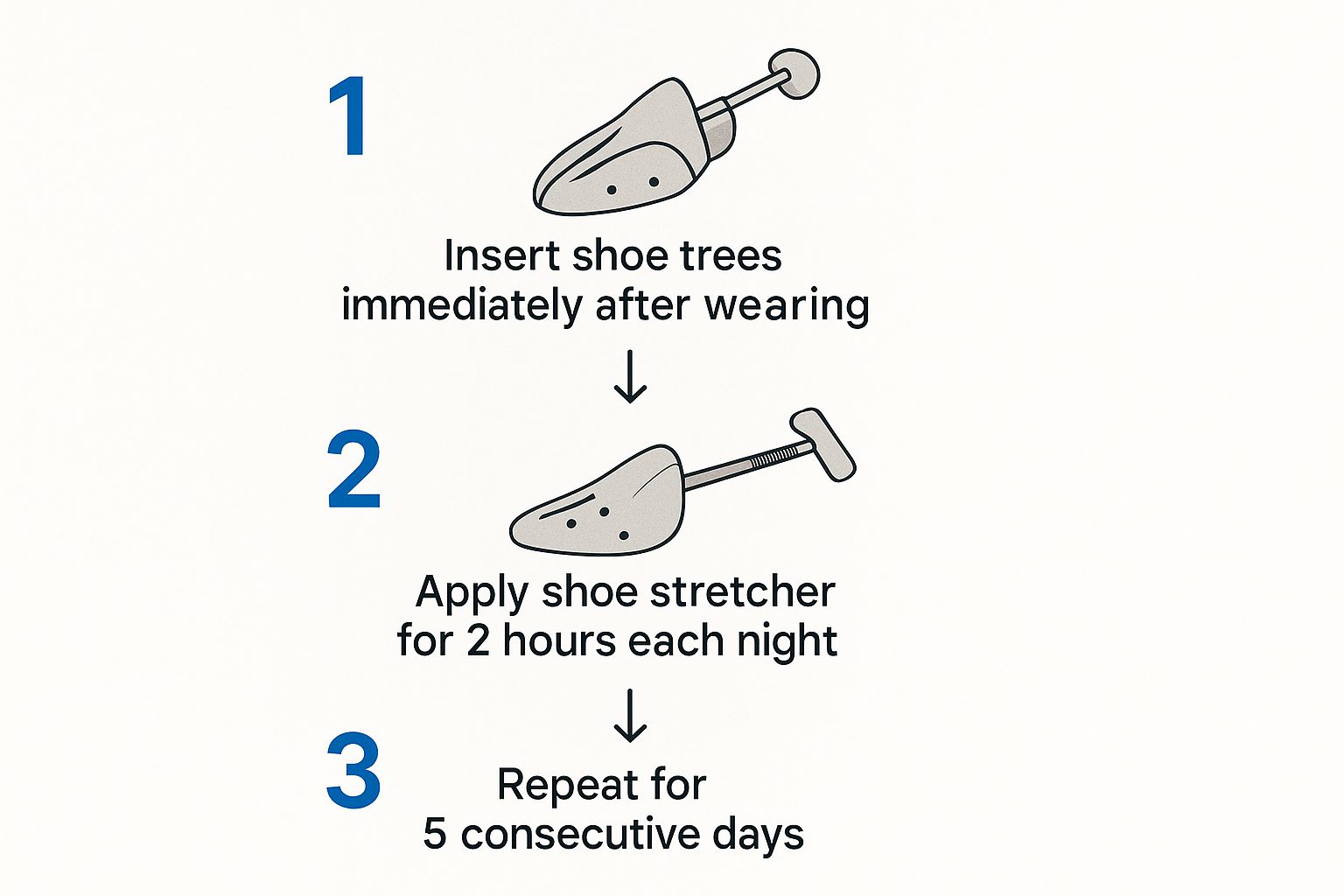
After wearing them, always insert cedar shoe trees. They absorb moisture and, more importantly, help the shoes maintain their newly molded shape as the leather cools and dries.
How to Use Tools for Stubborn Problem Spots
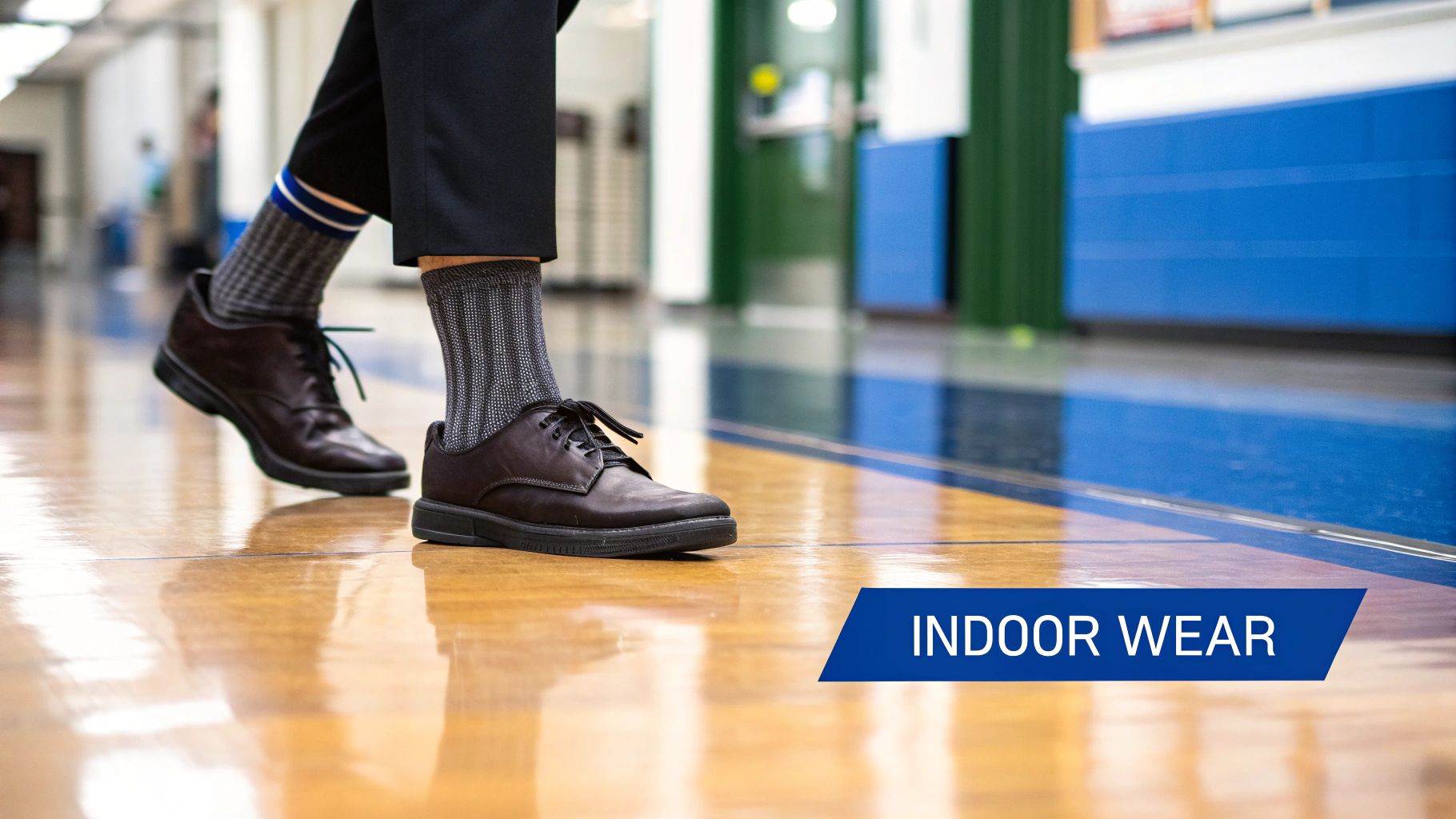
Sometimes, one stubborn spot refuses to yield. A pinching heel, a tight toe box—this is when specialized tools can save the day. Think of them not as aggressive hacks, but as precision instruments for perfecting the fit.
The Power of a Shoe Stretcher
A two-way shoe stretcher is a game-changer for targeting specific problem areas. While thick socks provide an all-over stretch, a stretcher applies constant, targeted pressure right where you need it most.
- Prep the Leather: Lightly spritz the tight area (inside and out) with a shoe-stretching spray. This solution helps relax the leather fibers, making them more pliable.
- Insert and Adjust: Place the stretcher inside the shoe. Turn the handle to expand its width or length, stopping as soon as you see the leather begin to bulge slightly. Don't over-crank it.
- Be Patient: Leave the stretcher in place for at least 24 to 48 hours. This gives the leather time to set into its new, more comfortable shape.
This method safely adds that crucial extra millimeter of space, protecting your investment in a pair of premium black leather dress shoes.
Soften From the Inside Out with Conditioner
A quality leather conditioner is your best friend. It works by moisturizing the leather fibers, making them significantly more flexible and supple.
- Apply a thin, even layer of conditioner to the entire shoe, paying extra attention to stiff areas.
- Let it absorb completely before wearing.
Properly hydrated leather conforms to your foot’s shape much faster. Experts confirm it helps soften the material without causing damage. This simple step nurtures the material while dramatically cutting down your break-in time. For more on proper footwear care, see our Ultimate Guide to Elevator Shoes.
3 Common Mistakes That Will Ruin Your New Shoes
Knowing how to break in new dress shoes also means knowing what not to do. Many popular "hacks" can cause irreversible damage to premium leather, turning your investment into a costly mistake.
1. The Freezer Method: The idea is to freeze a water-filled bag inside your shoes, letting the expanding ice stretch them. Don't do it. The extreme cold can make leather brittle and crack the finish, while the moisture can destroy the glues holding the sole together.
2. The Hairdryer Hack: Blasting your shoes with a hairdryer seems logical, as heat makes leather pliable. But direct, intense heat strips the leather of its natural oils. You're left with a shoe that's discolored, stiff, and prone to cracking.
3. Rushing the Process: The most common error is impatience. Never wear a brand-new pair of dress shoes to an all-day wedding or for a full 8-hour workday. This guarantees painful blisters and puts immense stress on the shoe's seams before they've adapted. If you need all-day comfort, finding the right comfortable dress shoes for work is the first step, but a patient break-in period makes them last.
Your Top Questions Answered
Even with the right strategy, questions come up. Here are the answers to the most common ones.
How Long Does It Take to Break In New Dress Shoes?
Generally, plan for two to four weeks. However, the true timeline depends entirely on the shoe's construction and leather quality. A sturdy, Goodyear-welted shoe might need the full four weeks to soften and mold perfectly. In contrast, a more flexible Blake-stitched shoe could feel great after just a few short wears around the house.
Should New Leather Dress Shoes Hurt?
No. Your new shoes should feel snug and firm, but they should never cause sharp or intense pain. A little pressure is normal as the leather learns your foot's shape. However, immediate pinching, rubbing that causes blisters, or real agony is a major red flag. This indicates a poor fit, not a shoe that needs breaking in. The right fit is everything, a topic we explore in our guide on how to look taller in shoes.
Can a Cobbler Break In Shoes for Me?
Absolutely, and it's often the smartest move for stubborn shoes. A professional cobbler has specialized machines that can stretch leather precisely where it's needed, without the guesswork. If your at-home methods aren't working, or you're nervous about damaging an expensive pair, a trip to the cobbler can accomplish in hours what might take you weeks of discomfort.
At Conzuri, we believe confidence starts from the ground up. Our dress shoes are crafted from premium materials designed not just to elevate your style, but to mold perfectly to your feet for a fit that feels truly custom. Unlike traditional brands that can feel clunky, Conzuri designs blend modern silhouettes with discreet height-boosting technology for a seamless look. Experience the difference for yourself.
Recent Articles


