


Is that first step out of bed a sharp reminder of the nagging pain in your feet? You're not alone, but you don't have to accept it as your new normal. Most foot pain isn't a life sentence—it's a direct signal that your shoes are failing you. Without proper support, cushioning, and the right fit, your footwear is actively working against your body's foundation.
This guide is your roadmap to freedom. We'll break down exactly what features provide genuine relief, from structured arch support to shock-absorbing midsoles. You'll learn how to diagnose your specific issue and match it to the right shoe, so you can finally leave foot pain behind.
Why Your Shoes Are the Secret to Ending Foot Pain
Tired of foot pain dictating your day? It’s a miserable cycle. You wake up with aching heels, push through hours of discomfort, and end the night wishing for relief. While this story is incredibly common, it is absolutely not normal. Your shoes should be a tool for a healthier, more active life—not the source of your agony.
Think of your feet as the foundation of your body. When that foundation is unstable, the entire structure suffers. That’s precisely what happens with every step in the wrong footwear, turning a simple walk into a painful chore.
The Undeniable Link Between Footwear and Well-Being
The connection between your shoes and your overall health is scientifically proven. Every step sends impact shockwaves up through your feet, ankles, knees, and spine. Well-designed shoes for foot pain act like a high-performance suspension system, absorbing that shock and distributing pressure evenly.
When shoes fail, specific parts of your foot take a beating, leading to common ailments:
- Plantar Fasciitis: That sharp, stabbing pain in your heel.
- Arch Strain: A deep, persistent ache from a lack of support.
- Bunions & Hammertoes: Painful deformities aggravated by narrow, restrictive shoes.
- General Soreness: All-over discomfort after a day of standing or walking.
Investing in proper footwear isn't a quick fix; it's a long-term strategy for preventing chronic pain and maintaining mobility. The right pair can improve your posture, ease joint stress, and give you back the freedom to move without a second thought.
Your Path to Lasting Comfort Starts Now
This guide will empower you to find that freedom. We'll demystify the essential features of a truly supportive shoe, helping you identify what your feet desperately need. Whether you're on your feet all day at work or enjoying a weekend stroll, the right knowledge makes all the difference.
For those in demanding jobs, understanding the mechanics of the best shoes for standing all day is the first critical step. Let’s begin the journey to pain-free living.
What Causes Foot Pain? Understanding the Root Problem
Before you can choose the right solution, you have to diagnose the problem. Foot pain isn't a single issue; it's a symptom with many potential causes. Pinpointing the real source of your discomfort is the key to finding relief that actually lasts. It’s about selecting shoes that work with your foot's natural mechanics, not against them.
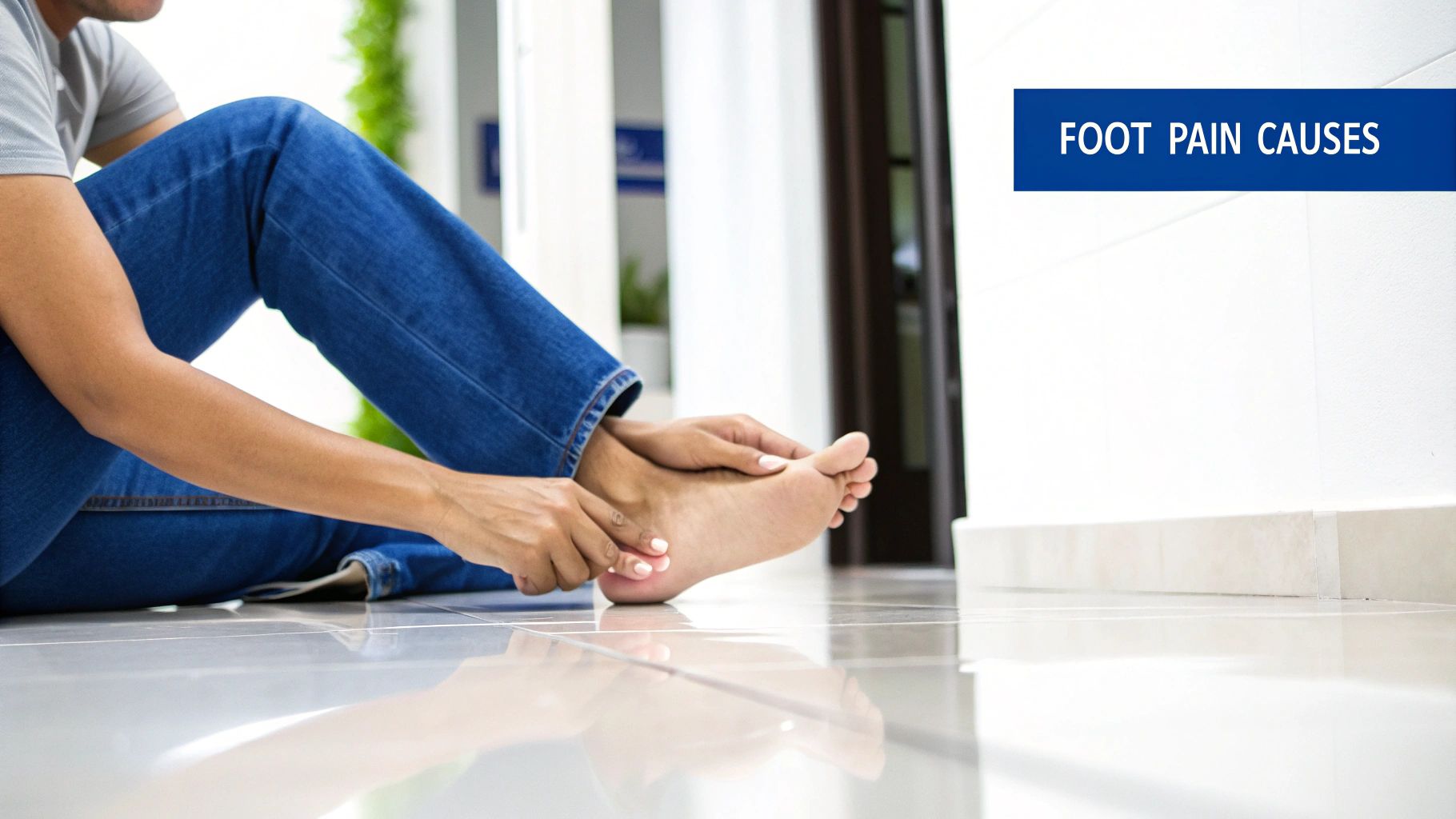
It's no secret that standard shoes often fall short. The orthopedic footwear market is exploding for a reason. Valued at USD 4.37 billion in 2024, it’s projected to reach nearly USD 15.45 billion by 2037. This massive growth isn't a fad; it's a direct response to a global need for footwear where proper support isn't a luxury—it's a necessity.
Are You Dealing With Plantar Fasciitis?
Does that first morning step feel like you're stepping on a nail? If that sharp heel pain sounds familiar, you're likely dealing with plantar fasciitis.
This condition is an inflammation of the thick band of tissue (the plantar fascia) that runs from your heel to your toes. When you're on your feet constantly, especially in unsupportive shoes, this ligament becomes overworked and inflamed. The right shoes act as your first line of defense.
Look for these non-negotiable features:
- A firm heel counter: The stiff cup at the back of the shoe that locks your heel in place, providing crucial stability.
- A deep heel cup: This cradles the heel, delivering targeted cushioning and shock absorption right where the pain is most intense.
- Exceptional arch support: By supporting your arch, the shoe offloads tension from the plantar fascia, giving it a chance to heal.
What if You Have Flat Feet or Overpronation?
If you have flat feet (also known as "fallen arches"), your foot likely rolls too far inward with each step. This biomechanical issue is called overpronation, and it's a notorious alignment-wrecker.
This inward collapse doesn't just cause arch strain; the misalignment travels up the kinetic chain, often leading to knee, hip, and lower back pain. Your mission is to provide the structural support your arches are missing.
For flat feet, you need shoes with robust stability features. Look for a firm, structured arch and a dense midsole that prevents your foot from collapsing inward. This helps realign your entire body from the ground up. For a broader perspective, it's helpful when understanding leg, foot, knee, and ankle pain as an interconnected system.
How Bunions Demand More Space
A bunion is a painful, bony bump that forms on the joint at the base of the big toe. It’s often caused or severely aggravated by shoes that are too narrow, forcing your toes into an unnatural position.
For those suffering from bunions, the solution is refreshingly simple: give your toes room to breathe.
A shoe's toe box—the entire front section—is the single most important feature for bunion relief. It must be wide and anatomical, allowing your toes to spread out naturally without being compressed.
A soft, flexible upper material is also a major benefit, as it reduces friction and irritation against the sensitive area. By identifying your specific condition, you can shop with purpose, choosing shoes with the exact features engineered to solve your problem.
The Anatomy of a Pain-Relieving Shoe: What to Look For
What truly separates a shoe that alleviates foot pain from one that just looks good? It’s all in the engineering. Let’s break down the key features that deliver genuine comfort and long-term relief.
Think of a shoe's midsole as a car's suspension. A cheap car gives you a jarring ride, and a cheap shoe does the same to your body. Without engineered cushioning to absorb impact, your joints take the full force of every step, leading to fatigue and chronic pain.
The image below highlights the essential components that transform a regular shoe into a powerful tool against foot pain.
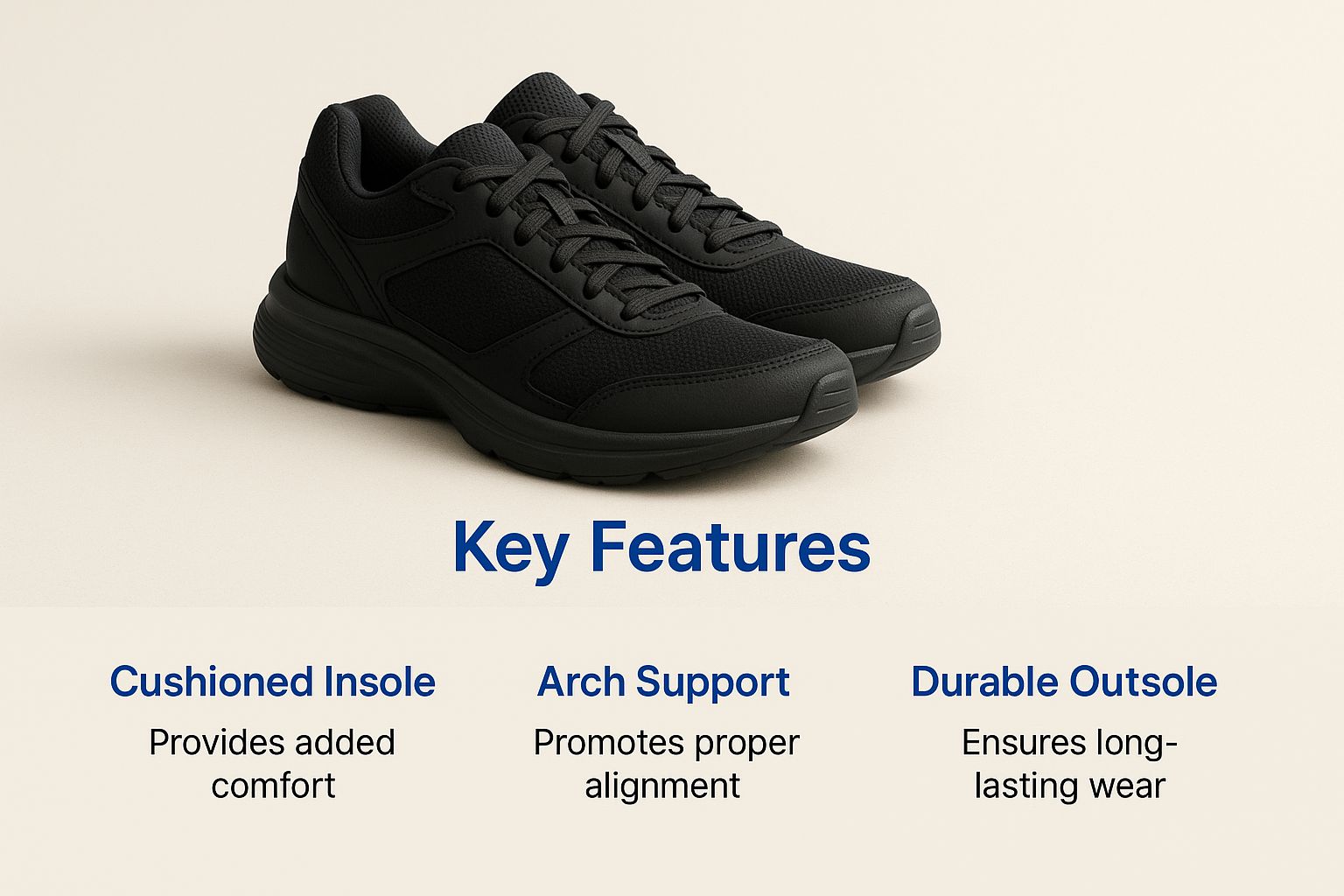
As you can see, every element—from the supportive heel counter to the spacious toe box—has a critical job. When they work in harmony, they create an environment where your feet can function correctly and without pain.
Proper Cushioning and Shock Absorption
Cushioning is your foot’s primary defense against impact. Every time your heel hits the ground, force travels up your leg. A well-cushioned shoe acts like a sponge, absorbing that shock before it can damage your joints. Modern foams are engineered to be soft on landing but responsive enough to provide energy return for your next step. If you spend hours on hard surfaces like concrete, superior cushioning isn't just nice—it's essential.
Structured Arch Support is Non-Negotiable
Arch support is more than a soft insert; it's the bedrock of your body's alignment. Your arch is a natural shock absorber, but if it collapses inward (overpronation), it can throw your entire kinetic chain out of whack.
Key Takeaway: True arch support distributes pressure evenly across the foot. This prevents any single area from taking too much strain, which is a primary cause of conditions like plantar fasciitis.
Don't be fooled by flimsy, flat insoles. Effective support comes from a firm, contoured footbed that actively cradles and lifts your arch. It should feel secure, not just squishy.
Critical Stability Features for a Balanced Stride
Stability is what prevents your foot from rolling or twisting unnaturally. It provides a grounded, balanced feel that significantly reduces the risk of sprains and strains. This is achieved through two key components:
- A firm heel counter: This rigid cup at the back of the shoe locks your heel in place, providing vital side-to-side stability.
- A rigid shank: This is the shoe's spine—a firm plate embedded in the midsole. It prevents the shoe from twisting, ensuring it only flexes at the ball of your foot, where it’s supposed to.
Pro Tip: If you can easily twist a shoe like a wet towel, it offers zero stability. To learn more about how a shoe's construction affects your body, understanding what heel-to-toe drop is is a great place to start.
Why a Spacious Toe Box Matters
Finally, let's talk about the front of the shoe. A spacious toe box is arguably the most overlooked feature for preventing painful conditions like bunions, hammertoes, and neuromas. Your toes need room to splay naturally with every step. A narrow, pointed shoe forces them into a cramped, unnatural position, leading to friction and deformities. Always look for a rounded or anatomical shape that mirrors the natural outline of your foot.
Quick-Reference Guide: Match the Shoe to Your Pain
Not all foot pain is created equal. Use this table to identify the most critical features for your specific condition, so you can shop smarter and find real relief.
| Foot Condition | Primary Feature Needed | Secondary Feature | Feature to Avoid |
|---|---|---|---|
| Plantar Fasciitis | Structured Arch Support | Deep Heel Cup | Flat, Flimsy Shoes |
| Bunions | Spacious Toe Box | Soft Upper Materials | Narrow, Pointed Toes |
| Flat Feet | Stability & Motion Control | Firm Midsole | Minimalist Shoes |
| Heel Spurs | Excellent Cushioning | Shock Absorption | High Heels |
| Metatarsalgia | Forefoot Cushioning | Rocker-Bottom Sole | Thin, Hard Soles |
By focusing on the features that directly address your problem, you can find a shoe that provides a real solution, not just a temporary bandage.
How to Choose Supportive Shoes for Your Lifestyle
Let's be real—the most advanced orthopedic shoe is useless if it stays in your closet. Finding footwear that eliminates pain isn't just about technical specs; it’s about matching those features to your actual life. The best shoes are the ones you’ll want to wear every single day.
So, how do you find a shoe that handles a busy commute, looks professional, and still supports you on a weekend walk? The answer: you stop searching for one magic pair. Instead, you build a small, strategic rotation of supportive shoes, each designed for a different part of your life.
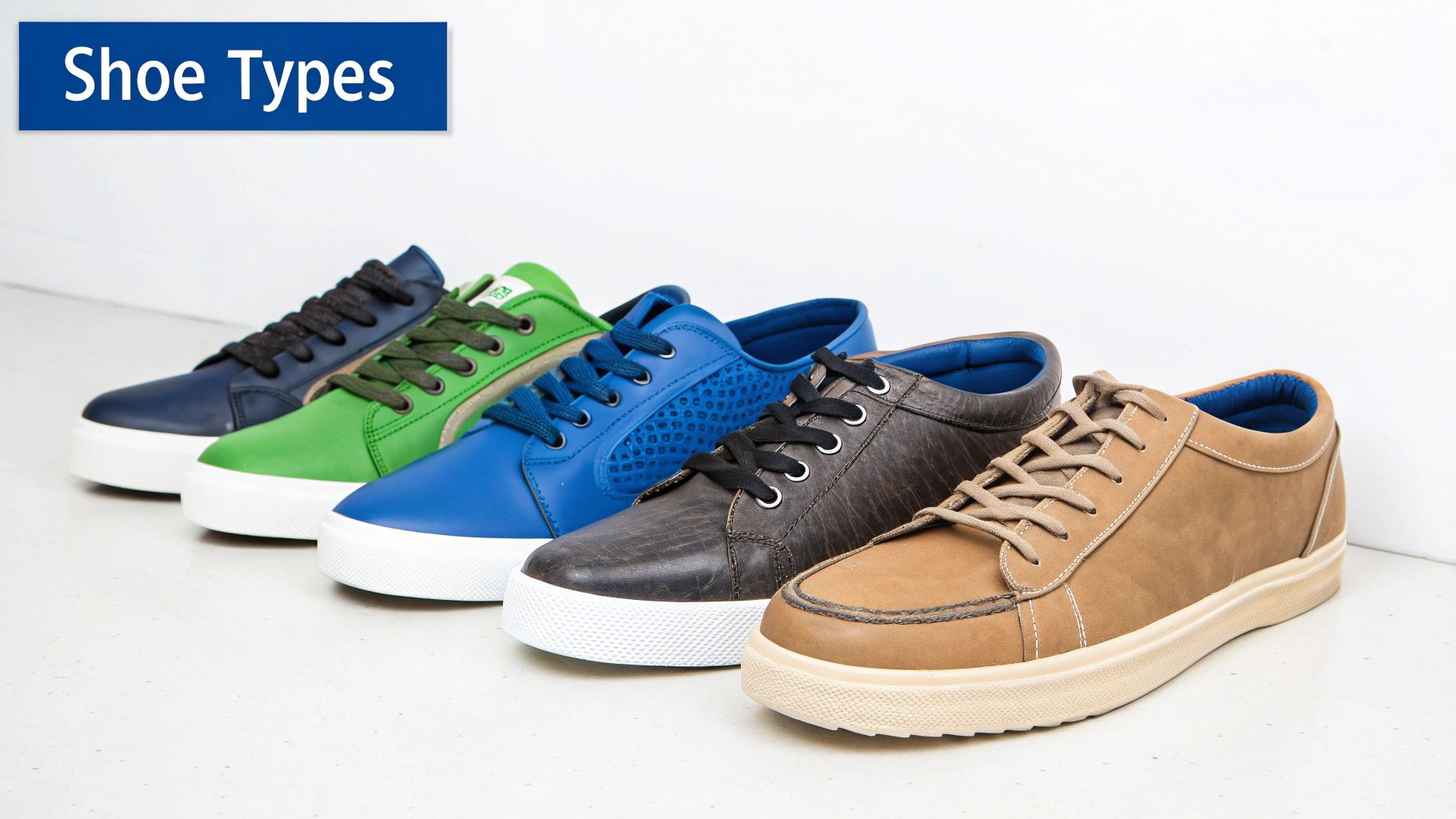
This lifestyle-focused approach is why the orthopedic footwear market is thriving. Valued at roughly US$10.67 billion in 2024, it’s projected to hit US$30.96 billion by 2034. This reflects a fundamental shift: people are demanding specialized support that doesn't compromise on style. Unlike traditional brands that often look clunky, modern designers integrate support seamlessly.
Best Shoes for Daily Wear and Walking
For daily errands, commuting, and casual walks, you need consistent shock absorption and durability. Your shoes should feel just as supportive on step 1,000 as they did on step one.
Look for these key features:
- Responsive Midsole Cushioning: This is your primary defense, absorbing the constant impact of walking on hard pavement to protect your joints.
- A Durable Outsole: High-quality rubber provides excellent traction and prevents uneven wear, which can throw your body out of alignment over time.
- Breathable Upper Materials: Proper airflow keeps your feet cool and dry, which is essential for preventing blisters and irritation.
For a deeper look into what makes a great everyday shoe, explore our guide to the best walking shoes with arch support.
Finding Supportive Shoes for the Office
The office presents a classic dilemma: how to look professional without suffering in silence. Thankfully, the days of choosing between bulky "comfort" shoes and painful dress shoes are over.
Modern brands have mastered the art of hiding powerful support systems within sleek, stylish silhouettes. A great supportive dress shoe will feature a firm shank for stability and a cushioned footbed that won't flatten by noon. For more casual offices, even well-constructed comfortable clogs can offer surprising cushioning and relief.
What Footwear Do You Need for an Active Lifestyle?
When you’re running, hiking, or working out, the forces on your feet are amplified. This is where sport-specific features become non-negotiable for preventing injury and managing pain.
For high-impact activities, you need shoes with enhanced stability to prevent ankle rolls, targeted cushioning in the heel and forefoot, and a secure fit that locks your foot in place.
Don't make the mistake of wearing a generic sneaker for every activity. A running shoe is built for forward motion, while a training shoe is designed for lateral stability. Using the right tool for the job is the smartest way to stay active without pain.
Beyond the Shoe: Holistic Habits for Healthy Feet
The right shoes are the cornerstone of conquering foot pain, but they're not the only piece of the puzzle. Think of supportive footwear as your foundation. To build lasting relief, you need to incorporate a few simple, powerful habits that keep your feet strong, flexible, and resilient.
These practices work in tandem with your shoes to create a complete foot care system. They require minimal time but deliver a massive impact on your daily comfort by addressing the root causes of pain.
Why You Should Be Stretching Daily
Tight muscles are a leading cause of foot pain, especially for chronic conditions like plantar fasciitis. When your calf muscles and Achilles tendon are constantly tight, they pull on your heel bone, creating relentless tension in the tissues under your foot.
Just a few minutes of stretching each day can work wonders.
- Calf Stretch: Face a wall with one foot forward and one back. Keep your back leg straight with the heel firmly on the floor. Lean forward until you feel a gentle stretch in your calf. Hold for 30 seconds, then switch legs.
- Achilles Tendon Stretch: Stand on a step with your heels hanging off the edge. Slowly lower your heels below the step until you feel a deep stretch in the back of your ankle. Hold for 30 seconds.
These simple movements improve flexibility, reduce strain, and are a non-negotiable part of any serious foot health routine.
Listen to Your Body and Rotate Your Shoes
Your feet send you signals all day long. That dull ache after a few hours? That sharp twinge on a walk? That’s your body telling you something is wrong.
Never push through the pain. Ignoring these signals almost always makes the underlying problem worse.
One of the easiest ways to prevent this is to rotate your shoes. Wearing the same pair every day compresses the cushioning foam without giving it time to recover. By alternating between two or three supportive pairs, you allow the midsoles to decompress and maintain their shock-absorbing properties. This also helps you learn how to break in new dress shoes without causing new issues.
Knowing when to replace your shoes is equally important. Most high-quality shoes last between 300 and 500 miles of use. Once the cushioning and structure break down, they do more harm than good.
More people are recognizing this need for quality. In North America, the orthopedic shoe market surpassed USD 1.57 billion in 2023, a clear sign that consumers are tired of dealing with preventable issues. Supportive footwear is no longer a niche market—it's an essential part of modern wellness.
People Also Ask: Your Foot Pain Questions Answered
Choosing the right shoes when you're in pain can feel overwhelming. Even with the right information, a few lingering questions can cause uncertainty. Let's clear up the most common concerns right now.
Think of this as your final checklist—straightforward answers to help you make a confident decision. You don't have to choose between looking good and feeling good.
How Long Does it Take to Break in New Shoes?
Let's bust a common myth: truly supportive shoes shouldn't require a long, painful break-in period. While any new pair may need a few hours to mold to your foot, they should feel comfortable and supportive right out of the box. Wearing them for an hour or two at a time for a few days is all it should take. If you experience pinching, sharp pain, or blisters, the shoe doesn't fit properly. Real comfort doesn't require suffering.
Can Stylish Shoes Actually Be Good for Your Feet?
Absolutely. The era of sacrificing style for comfort is over. Innovative brands now embed powerful support technology into clean, modern, and fashionable designs. The best features are often invisible. You can find sleek dress shoes with hidden steel shanks for stability or minimalist sneakers with advanced, integrated arch support. The key is to look beyond aesthetics and verify the core engineering. True support is built from the inside out.
Are Expensive Orthopedic Shoes Always the Best Option?
Not necessarily. A high price tag can indicate premium materials, but it's no guarantee that the shoe will solve your specific problem. The best shoe is the one that correctly addresses your foot condition and suits your lifestyle. A moderately priced shoe with the perfect arch support for your plantar fasciitis is far more valuable than a luxury shoe designed for a different issue. Focus on features first, price second.
Remember, the goal is finding the right tool for the job. Some shoes are designed with a specific purpose, like providing a discreet height increase, and can also incorporate superior comfort. Understanding what a shoe lift is shows how different benefits can work together.
How Do I Know If I Have the Right Shoe Size?
A perfect fit is the foundation of pain relief. Use this simple checklist every time you try on shoes:
- The Thumb's Width Rule: Ensure there's about a thumb's width (half an inch) between your longest toe and the end of the shoe.
- No Pinching: Your foot should feel snug and secure, but never cramped. Your toes need room to spread out.
- Check the Heel: Your heel should not slip out when you walk. A tiny bit of movement is normal, but significant slipping is a red flag.
- Shop in the Afternoon: Your feet naturally swell throughout the day. Trying on shoes later ensures you get the most accurate fit for all-day comfort.
Never compromise on fit. It is the single most important factor for happy feet.
Ready to find footwear that combines cutting-edge support with effortless style? Conzuri designs shoes that not only alleviate discomfort but also provide a subtle boost in height and confidence.
Explore our complete collection of pain-relieving, height-boosting shoes today.
Recent Articles


